Kids makeup kits often look harmless—small palettes, bright colors, maybe even glitter. But what’s actually in those little pots and tubes? Understanding the contents is the first step to deciding whether they’re truly safe for children’s delicate skin.
Common Ingredients in Children’s Cosmetic Products
Many kids makeup kits contain ingredients similar to adult cosmetics, but not always at the same concentrations. You might find colorants like FD&C dyes, emollients such as mineral oil, and preservatives like parabens or phenoxyethanol. Some kits include mica or glitter for sparkle, which may irritate eyes or dry skin if not properly formulated.
Not all ingredients are harmful, but some—especially synthetic fragrances or formaldehyde-releasing agents—can be problematic. In a 2021 study from Environmental Health Perspectives, trace amounts of heavy metals were found in several low-cost cosmetics labeled for children.
Why Kids’ Skin Requires Special Care
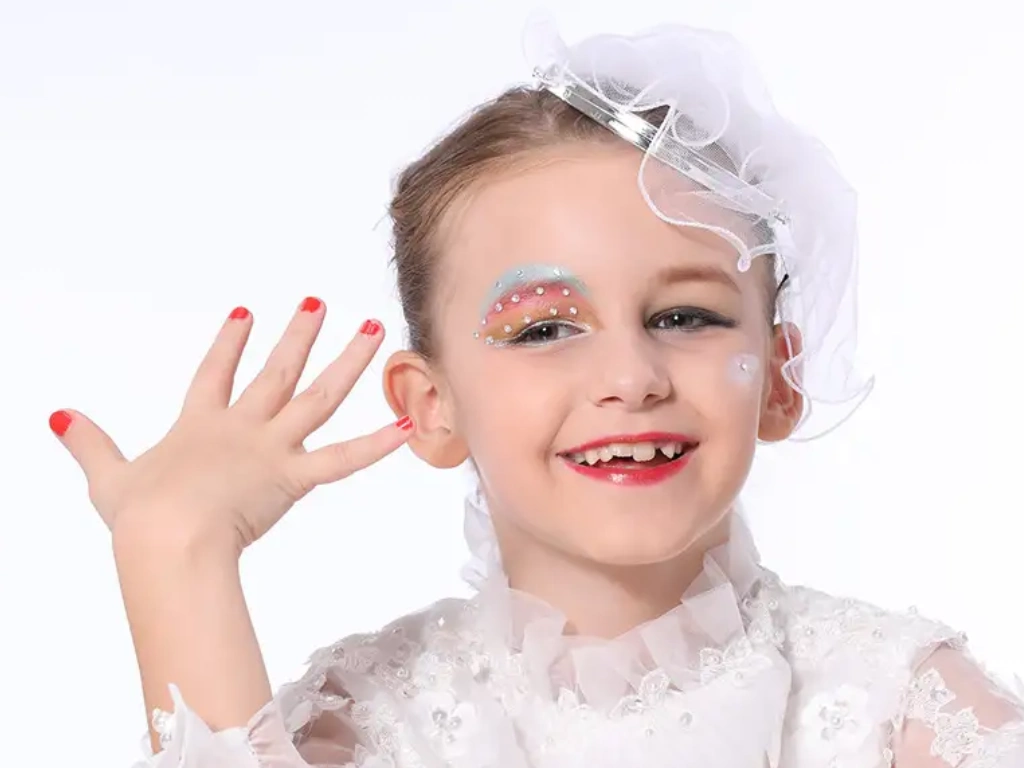
Children’s skin is thinner and more absorbent than adult skin. This means it can absorb chemicals more quickly, and react more easily to irritants. Their natural barrier (the outermost skin layer) is still developing, making them more vulnerable to redness, rashes, or dryness from prolonged exposure to certain cosmetic formulas.
For example, a preschooler who used face paint at a birthday party may develop tiny bumps or dry patches the next day, even if the makeup was labeled “safe.” This doesn’t mean every kit is dangerous—but it does mean kids’ skin needs more protection and shorter wear time.
How Kids’ Makeup Differs from Adult Products
At first glance, kids’ makeup kits seem like mini versions of adult products. But they’re often made with cheaper materials and may lack the same safety oversight. Adult cosmetics are typically tested for long-term skin use. Kids’ kits—especially play-oriented ones—may be treated more like toys, which means they might follow different safety rules depending on the country of origin.
Also, kids tend to use makeup differently. Instead of applying it carefully, they may smear it on, layer colors, or even get it near their mouths or eyes. These behaviors raise new safety questions that adult products weren’t designed to answer.
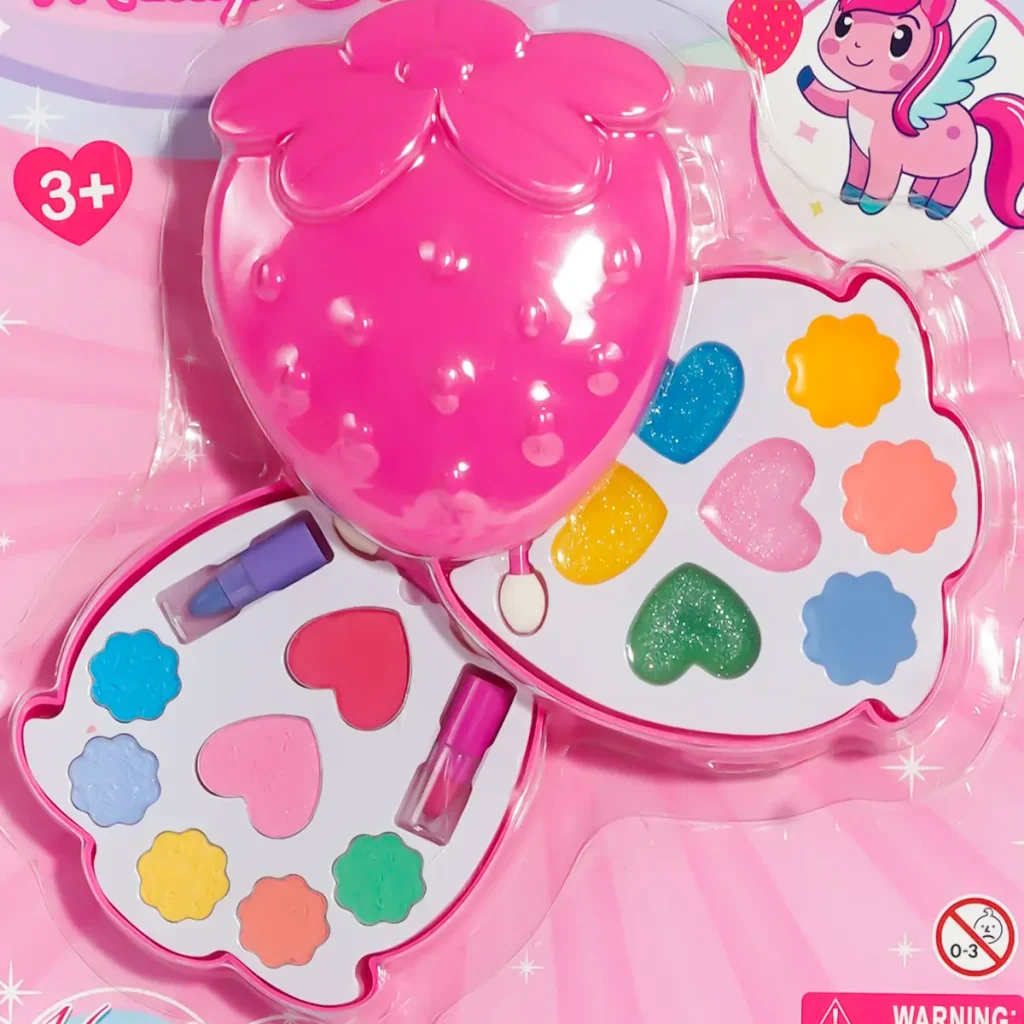
Are Kids Makeup Kits Safe for All Ages?
Makeup kits designed for kids may look safe on the surface, but age matters. Young children have different skin needs—and different habits—compared to older kids. Safety depends not just on ingredients, but on who’s using the kit and how.
Safety Considerations for Toddlers and Preschoolers
For toddlers and preschoolers, makeup kits pose more risk. At this age, kids may rub makeup near their eyes, lick their fingers, or leave paint on overnight. Since their skin barrier is still developing, even mild ingredients can cause irritation.
If a product contains fragrance, glitter, or untested pigments, it’s best to avoid it for kids under 3. The FDA does not require pre-market approval for cosmetics, so the burden falls on caregivers to check what’s inside. Always choose kits labeled for ages 3 and up—and even then, with caution.
Recommended Age Guidelines and Supervision
Most safe-use guidelines suggest makeup play should begin at age 5 or older. By that age, children can better follow hygiene instructions and avoid rubbing their eyes or mouth. Still, adult supervision is essential.
Makeup play should be time-limited—usually no more than a few hours. After play, wash the skin with a gentle cleanser and moisturize. And remember, sharing brushes or sponges can spread bacteria, so tools should be cleaned between uses.

Toxic vs. Non-Toxic: What the Labels Really Mean
You’ve likely seen “non-toxic” stamped on a makeup kit package. But what does that label really guarantee? Sadly, not much. In the U.S., “non-toxic” is not strictly regulated in the cosmetic space. Understanding what this label means—and doesn’t mean—is key.
Defining “Non-Toxic” in the Cosmetic World
In marketing, “non-toxic” often just means a product won’t cause harm in small amounts. But it doesn’t mean the formula is completely free from allergens or synthetic chemicals. In fact, even products with this label can contain parabens, dyes, or fragrance oils that cause skin reactions.
According to the Campaign for Safe Cosmetics, many ingredients in children’s cosmetics haven’t been fully tested for long-term exposure, especially on young skin. So, “non-toxic” is better than nothing—but not a guarantee of safety.
Red Flags to Look for on Product Labels
When reviewing a kids makeup kit, scan the ingredient list for red flags. Watch for:
- Fragrance (can hide dozens of chemicals)
- Parabens (used as preservatives)
- Formaldehyde releasers (like DMDM hydantoin)
- Phthalates (sometimes hidden in “perfume”)
Also, avoid products with unclear labeling or no ingredient list at all. If you can’t verify what’s inside, it’s safer to skip it.
How to Spot Harmful Ingredients in Kids Makeup Kits
Knowing how to identify unsafe ingredients is a major part of protecting your child’s skin. Many look harmless at first—but the effects may show up after repeated use or prolonged wear.
Common Irritants and Allergens
Even natural-sounding ingredients can cause issues. Lanolin (from wool), essential oils, and some plant extracts are common allergens. Synthetic colors like Red 40 and Yellow 5 may cause skin reactions in sensitive children.
Some symptoms may include itching, redness, small bumps, or dry patches. These can appear hours after application. That’s why it’s wise to patch test any new product on the inside of the forearm first.
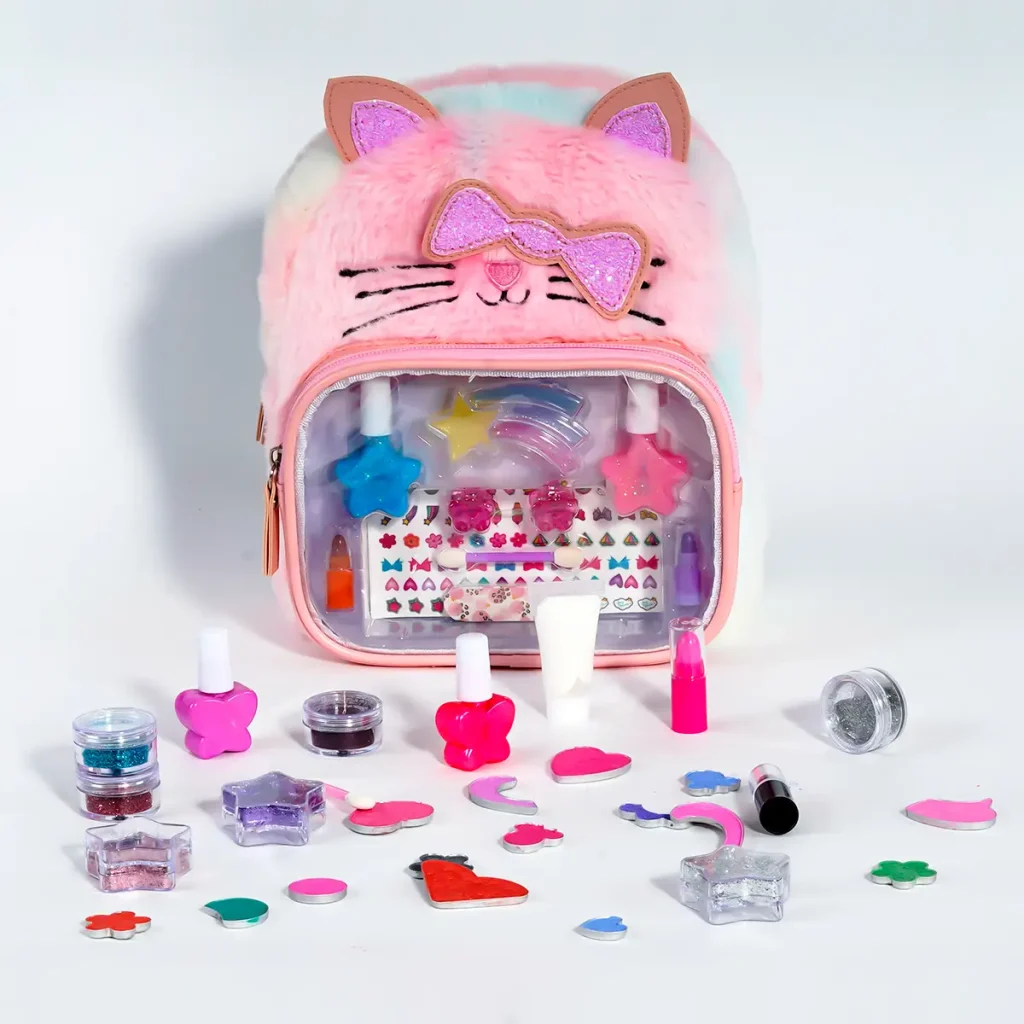
Heavy Metals, Preservatives, and Synthetic Dyes
Low-cost kids makeup may contain trace amounts of lead, cadmium, chromium, or nickel, especially in bright-colored products or glitter. These metals can enter the body through the skin or mouth and build up over time.
Preservatives like methylisothiazolinone (MI) and butylparaben are known to cause contact dermatitis. Long-term exposure to synthetic dyes—especially those not approved for use near eyes—can also cause irritation or worse.
Always check for third-party testing certifications or look for products that follow EU cosmetic safety standards, which are often stricter than U.S. guidelines.
How Skin Sensitivity Impacts Kids Makeup Safety
Every child’s skin is different. Some kids can use makeup with no issues, while others may react even to mild ingredients. Understanding how sensitivity works helps prevent unwanted surprises.
Reactions to Watch for During and After Use
Watch for redness, itching, swelling, or tiny bumps, especially around the eyes, cheeks, or mouth. These may appear minutes or hours after application. In some cases, dry or flaky patches show up the next day. If symptoms last more than 24 hours, discontinue use and consult a pediatrician.
Importance of Patch Testing for Children
Before using a new makeup kit, apply a small amount to your child’s inner forearm. Wait 24 hours. If no irritation appears, it’s likely safe for short-term use. Always test each new product separately—especially those with color, shimmer, or fragrance.
Are DIY or Homemade Kids Makeup Kits Safer?
DIY makeup kits are often seen as safer because they use common household ingredients. But “natural” doesn’t always mean risk-free. Safety depends on what’s used, how it’s stored, and how long it’s kept.
Natural Ingredients and Their Risks
Ingredients like beet juice, cocoa powder, and cornstarch seem gentle. But natural pigments can still cause irritation or stain skin. Essential oils may also trigger allergic reactions. Homemade mixes often lack stabilizers, which means they can spoil quickly or change texture.
Storage, Shelf Life, and Hygiene Concerns
DIY products don’t contain preservatives, so they can grow bacteria faster than store-bought items. Store homemade makeup in clean, airtight containers. Keep them in the fridge and toss after one week. Never reuse DIY mixes without checking for smell, texture, or color changes.
Regulatory Standards and Product Safety Testing
Unlike food or medicine, cosmetics—including those for kids—face limited regulation. This makes understanding safety standards more important for parents.
U.S. FDA Guidelines for Children’s Cosmetics
The U.S. FDA does not require cosmetics to be approved before sale. However, all ingredients must be listed, and they must be safe when used as intended.
Unfortunately, some imported products don’t follow these rules. That’s why checking for U.S.-based manufacturing or third-party lab tests can help.
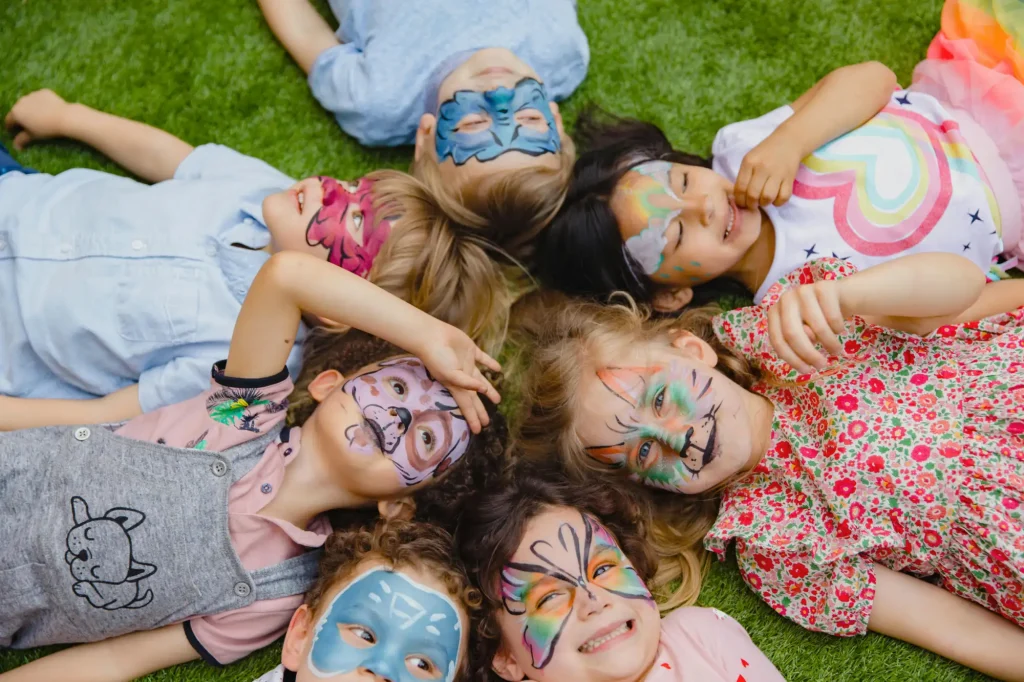
Safety Testing Protocols and What They Involve
Reliable safety testing checks for skin irritation, allergic reactions, and ingredient contamination. Look for kits labeled with “dermatologist-tested” or “hypoallergenic,” but remember—these terms aren’t legally defined. Independent testing certifications offer more reliable signs of safety.
Hygiene Practices That Make Makeup Kits Safer
Even safe products can cause problems if hygiene isn’t maintained. Clean tools and good habits can reduce the risk of breakouts, rashes, or infections.
Proper Brush and Applicator Cleaning
Clean brushes after every use using mild soap and warm water. Let them dry completely before storing. Sponges should be washed and air-dried or replaced regularly. Sharing brushes between kids is not recommended.
Avoiding Contamination During Use
Teach kids to wash hands before applying makeup. Avoid dipping fingers into product jars. Use clean cotton swabs or spatulas when possible. Close lids tightly and store kits in cool, dry places away from sunlight.
Psychological and Developmental Aspects of Kids Using Makeup
Makeup play isn’t just about color—it’s also about identity, imagination, and how kids see themselves. These experiences should be age-appropriate and positive.
Role of Pretend Play vs. Appearance Awareness
For younger children, makeup is often part of dress-up games, like pretending to be a princess or a superhero. This kind of play supports creativity. But by age 8 or 9, some kids start using makeup to change how they look. That’s when it’s important to guide how and why they use it.
Setting Healthy Boundaries with Cosmetic Play
Let makeup be a form of expression—not pressure. Parents can encourage play without reinforcing beauty standards. For example, set rules like “Makeup is for home and dress-up” or “We take it off before bedtime.” These help kids build a healthy relationship with appearance.

How to Talk to Your Child About Safe Makeup Use
Makeup can be a tool for creativity or confidence—but it’s also a chance to teach responsibility and self-care. Keep the conversation open and judgment-free.
Teaching Good Habits from the Start
Explain why clean hands, short wear time, and patch testing matter. Let your child help clean brushes or choose safe colors. Involve them in the safety process so they build good habits early.
Encouraging Creativity While Prioritizing Safety
Support your child’s imagination—encourage wild colors, animal faces, or silly designs. Just balance fun with safety by setting limits, like using makeup on weekends only or cleaning skin right after play.
Conclusion
Kids makeup kits can be safe when used with care, age-appropriate products, and proper hygiene. Always check ingredients, watch for reactions, and teach healthy habits. With the right guidance, makeup play can be both fun and skin-friendly for children.