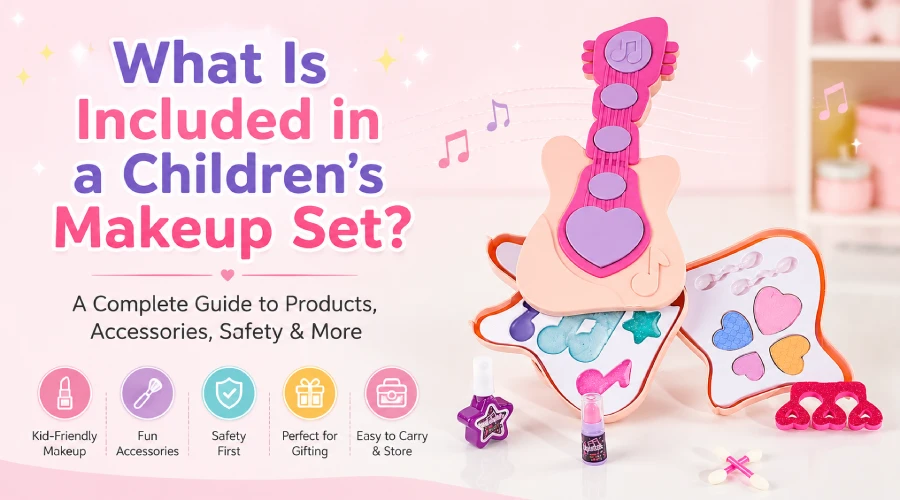
Short Answer: A children’s makeup set typically includes play makeup products, cosmetic accessories, applicators, storage packaging, and safety-focused formulations designed for young users. The exact contents vary by age group, brand positioning, and market requirements, but most sets contain kid-friendly lip products, eyeshadows, blushes, brushes, mirrors, and carrying cases.
For brands developing private label children’s cosmetics, understanding which components should be included—and why—is essential for product safety, customer satisfaction, and market competitiveness.
Standard Components of a Children’s Makeup Set
The table below summarizes the most common items found in children’s makeup kits.
Core Products Usually Included
1. Lip Gloss or Lip Balm
Lip products are among the most frequently included items in children’s makeup sets because they are:
- Easy to apply
- Highly visible
- Popular with parents and children
Most children’s sets use:
- Clear lip gloss
- Tinted lip balm
- Fruity-flavored lip products
- Non-sticky formulations
For younger age groups, lip balm often performs better than heavily pigmented lip products due to safety and ease of use.
2. Eyeshadow Palette
A mini eyeshadow palette is often the centerpiece of the set.
Typical features include:
- Multiple bright colors
- Soft pigments
- Washable formulations
- Low-dust pressed powders
Common color themes:
- Princess
- Unicorn
- Mermaid
- Rainbow
- Fairy Tale
Brands targeting the gift market usually prioritize colorful presentation over professional-level pigmentation.
3. Blush
Blush provides a complete makeup experience without increasing complexity.
Most children’s blushes are:
- Soft pink
- Peach
- Light coral
A single blush pan is usually sufficient for entry-level sets.
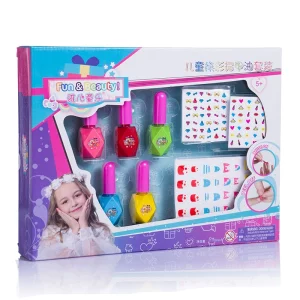
4. Water-Based Nail Polish
Many children’s makeup kits now include nail products because they increase play value.
Preferred options include:
- Peelable nail polish
- Water-based formulas
- Low-odor systems
- Quick-drying finishes
Parents generally favor nail products that can be removed without harsh removers.
Accessories Commonly Included
A makeup set is rarely composed of cosmetics alone.
Most successful products also include:
Brushes
Common brush types:
- Eyeshadow brush
- Blush brush
- Lip brush
Mini-sized brushes are typically preferred for children’s hands.
Sponge Applicators
These remain popular because they:
- Reduce cost
- Simplify application
- Fit compact packaging
Mirror
Many gift-oriented sets include:
- Built-in mirrors
- Folding mirrors
- Compact mirrors
The mirror often increases perceived product value.
Decorative Elements That Increase Market Appeal
Beyond makeup products, decorative accessories frequently improve customer engagement.
Examples include:
- Nail stickers
- Face gems
- Hair clips
- Temporary tattoos
- Rings
- Bracelets
These additions are especially common in holiday and birthday gift sets.
Decision Rule
If the target market is:
This approach helps balance product value and manufacturing cost.
Safety Features Consumers Expect
When evaluating a children’s makeup set, parents usually focus on safety before color selection.
Key considerations include:
Age-Appropriate Formulas
Products should be designed specifically for children rather than repackaged adult cosmetics.
Easy Removal
Washable formulas are often preferred because they:
- Reduce skin irritation risk
- Improve parent acceptance
- Simplify cleanup
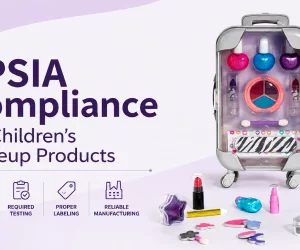
Regulatory Compliance
Depending on the target market, products may need to comply with regulations such as:
- CPSIA (United States)
- EU Cosmetic Regulation
- UK Cosmetics Regulation
- GCC requirements
- ASEAN Cosmetic Directive
Ingredient Screening
Manufacturers commonly evaluate formulas for:
- Heavy metal limits
- Microbiological safety
- Preservative effectiveness
- Stability performance
How to Choose the Right Children’s Makeup Set Configuration
There is no universal formula. The ideal product structure depends on brand goals.
For Startups
Recommended configuration:
- 4–6 eyeshadow colors
- 1 lip gloss
- 1 blush
- 2 applicators
- Compact gift box
Advantages:
- Lower investment
- Faster market testing
- Simplified inventory management
For Mass Retail
Recommended configuration:
- 8–16 eyeshadow colors
- Multiple lip products
- Nail polish
- Stickers
- Carrying case
Advantages:
- Higher perceived value
- Strong shelf presence
- Better gift appeal
For Premium Brands
Recommended configuration:
- Customized molds
- Themed packaging
- Exclusive color stories
- Multi-category cosmetic assortment
Advantages:
- Brand differentiation
- Higher retail pricing potential
- Stronger customer retention
Private Label Manufacturing Considerations
When developing a private label children’s makeup set, brands should evaluate more than product count.
A practical decision framework is:
- Target age group (3+, 6+, 8+, etc.)
- Sales channel (Amazon, retail, boutique, subscription box)
- Target retail price
- Required compliance standards
- Packaging concept
- Order volume requirements
An experienced manufacturing partner can help align formula selection, packaging design, compliance testing, and production planning to these business objectives.
For example, manufacturers with large-scale cosmetic production capabilities, flexible MOQ options, and integrated packaging resources can help both emerging brands and established companies launch children’s makeup collections more efficiently.

Guangdong AKIA Cosmetic Co., Ltd., with over 40 years of cosmetic manufacturing experience and a 40,000-square-meter production facility in Foshan, China, is one example of a supplier serving both startups and large brands through low MOQ and fast lead-time solutions.
Conclusion
A children’s makeup set generally includes lip products, eyeshadows, blushes, nail items, applicators, accessories, and themed packaging. However, the optimal configuration depends on the target age group, retail channel, compliance requirements, and price positioning.
For brands, the key decision is not simply what to include, but which combination of products delivers the best balance of safety, play value, cost efficiency, and market appeal. This decision-making approach leads to more successful product launches and stronger long-term brand performance.