A reliable kids makeup manufacturer is not simply a factory that offers low prices. The best partner can consistently deliver safe formulations, regulatory compliance, stable production capacity, customization capabilities, and long-term supply reliability.
For toy brands, retailers, chain stores, wholesalers, and private-label buyers, the evaluation process should focus on five core factors:
- Product safety and compliance
- Manufacturing capabilities and quality control
- Customization and product development strength
- Supply chain stability and production scalability
- Industry experience in children’s cosmetics
If a manufacturer performs well in all five areas, it is more likely to support sustainable business growth and reduce supply-chain risks.
Why Choosing the Right Kids Makeup Manufacturer Matters
Kids makeup products are fundamentally different from adult cosmetics.
Children’s products face stricter expectations regarding:
- Ingredient safety
- Product testing
- Packaging safety
- Regulatory compliance
- Consumer trust
A manufacturing issue can result in:
- Product recalls
- Retailer penalties
- Compliance violations
- Brand reputation damage
- Lost sales opportunities
For this reason, experienced buyers often evaluate manufacturers based on risk management rather than simply comparing quotations.
1. Verify Product Safety and Regulatory Compliance First
The Most Important Question
Before discussing pricing, ask:
Can the manufacturer provide evidence that the products comply with the regulations of your target market?
Different regions have different requirements:
What to Request
Ask the manufacturer for:
- Ingredient lists
- Safety reports
- MSDS documentation
- Stability testing reports
- Microbiological testing reports
- Heavy metal testing reports
- Product compliance documentation
Evaluation Logic
Strong manufacturer:
- Provides documentation quickly
- Understands multiple international markets
- Explains compliance requirements clearly
Weak manufacturer:
- Cannot provide complete documentation
- Gives vague answers about regulations
- Treats testing as optional
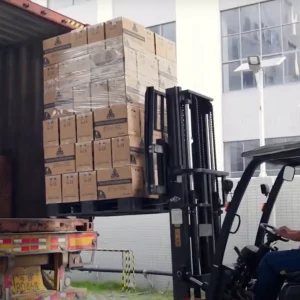
2. Assess Manufacturing Capacity Beyond Factory Size
Many buyers focus only on factory area or employee count.
Those metrics matter, but they do not tell the full story.
The real question is:
Can the manufacturer consistently deliver large orders on time while maintaining quality standards?
Key Factors to Review
Production Capacity
Ask:
- Monthly production volume
- Peak season capacity
- Number of production lines
- Lead times for repeat orders
Quality Control System
Look for:
- Incoming material inspection
- In-process quality checks
- Finished goods inspection
- Batch traceability systems
Supply Chain Management
Reliable manufacturers usually maintain:
- Stable raw material suppliers
- Multiple sourcing channels
- Inventory planning systems
Evaluation Logic
A factory may have a large building but poor production management.
A more reliable indicator is:
Historical delivery performance + quality consistency + repeat orders from long-term customers.
3. Evaluate R&D and Product Development Capabilities
Children’s cosmetics have become increasingly innovation-driven.
Retailers and brands are seeking:
- Trend-based product concepts
- Seasonal collections
- Character-inspired designs
- Interactive play experiences
- Educational toy-cosmetic combinations
This requires more than manufacturing.
It requires product development expertise.
Questions to Ask
- Does the manufacturer have an internal R&D team?
- Can they create custom formulations?
- Can they develop exclusive packaging?
- How often do they launch new products?
- Can they support trend forecasting?
Why It Matters
Manufacturers with strong R&D capabilities can help buyers:
- Differentiate products
- Improve margins
- Launch faster
- Reduce development costs
Evaluation Logic
If a supplier only produces according to existing molds and formulas, they function mainly as a production contractor.
If they actively contribute ideas, improve concepts, and accelerate development, they become a strategic manufacturing partner.
4. Check Customization and Private Label Capabilities
For mature brands and retail chains, customization is often a major requirement.
This can include:
- Custom formulations
- Exclusive colors
- Branded packaging
- Private label programs
- Gift sets
- Seasonal collections
- Promotional products
Three Levels of Manufacturing Service
Level 1: Stock Products
- Fastest launch
- Lowest investment
- Limited differentiation
Level 2: Private Label
- Existing formula
- Customized branding
- Moderate development cycle
Level 3: Full OEM/ODM Development
- Custom formula
- Custom packaging
- Exclusive product concepts
Evaluation Logic
The more unique your brand positioning becomes, the more important OEM/ODM capabilities become.
For retailers and chain stores competing in crowded markets, product differentiation often directly impacts profitability.
5. Review Industry Experience Specifically in Kids Makeup
Not all cosmetic factories understand children’s products.
Not all toy factories understand cosmetics.
Kids makeup sits between both industries.
A manufacturer should understand:
- Child-safe formulations
- Children’s usage behavior
- Toy-like packaging requirements
- Retail toy market expectations
- Cosmetic compliance requirements
Questions to Ask
- How many years have they produced kids makeup?
- Which markets do they serve?
- What product categories do they manufacture?
- Do they work with established brands?
- Can they provide development case studies?
Evaluation Logic
Experience reduces mistakes.
A manufacturer with decades of experience in children’s cosmetics has likely encountered and solved many formulation, packaging, compliance, and production challenges that newer suppliers may not anticipate.

6. Look for Long-Term Supply Stability
For wholesalers, supermarkets, chain stores, and established brands, consistency is often more important than obtaining the lowest unit price.
Important Indicators
Customer Retention
Ask:
- How many long-term customers does the factory serve?
- How long have major clients worked with them?
Export Experience
Manufacturers with international experience usually have stronger capabilities in:
- Documentation
- Compliance
- Logistics coordination
- Quality management
Scalability
Can the factory support:
- Initial market testing
- Growth-stage expansion
- Large seasonal promotions
Evaluation Logic
The ideal manufacturing partner should be able to support your business today and continue supporting it as volumes increase.
Changing manufacturers frequently creates significant operational risks and costs.
Manufacturer Evaluation Checklist
Use the following checklist when comparing suppliers.