Answer First:
The most commonly used non-toxic ingredients in kids makeup products include mineral pigments, plant-based waxes, naturally derived oils, mild emulsifiers, food-grade colorants, and gentle preservatives that meet cosmetic safety regulations. When evaluating a kids makeup formula, brands should prioritize ingredients that are non-irritating, heavy metal-controlled, free from prohibited substances, and suitable for sensitive skin.
For private label brands, selecting non-toxic ingredients is not simply about choosing “natural” materials. The key decision factor is whether the ingredient has a strong safety profile, regulatory compliance, and compatibility with children’s skin.
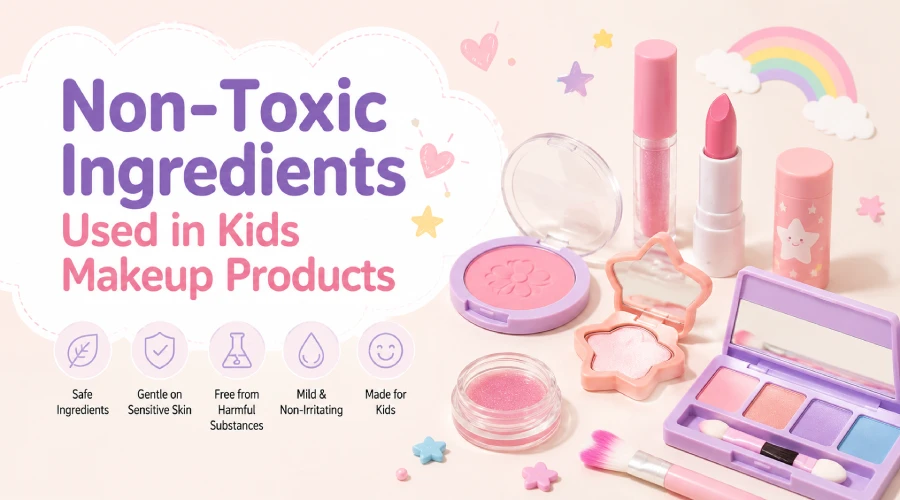
What Does “Non-Toxic” Mean in Kids Makeup?
In the cosmetics industry, “non-toxic” does not mean an ingredient is completely risk-free. Instead, it generally refers to ingredients that:
- Are approved for cosmetic use
- Have low irritation potential
- Are used within safe concentration limits
- Are free from known harmful substances
- Meet regional regulations such as FDA, EU Cosmetics Regulation, or CPSR requirements
For kids makeup products, safety assessment should focus on:
Common Non-Toxic Ingredients Used in Kids Makeup
1. Mineral Pigments
Mineral pigments are among the safest color sources used in children’s cosmetics.
Examples include:
- Iron Oxides (CI 77491, CI 77492, CI 77499)
- Titanium Dioxide
- Ultramarines
- Mica (cosmetic grade)
Why They Are Used
- Provide stable color
- Low skin irritation potential
- Good safety history in cosmetic applications
- Suitable for eyeshadow, blush, and face paint products
Selection Logic
When choosing mineral pigments, brands should verify:
- Heavy metal testing reports
- Cosmetic-grade certification
- Compliance with target market regulations
2. Plant-Based Waxes
Waxes help create structure and improve product performance.
Common options include:
- Candelilla Wax
- Carnauba Wax
- Sunflower Wax
- Rice Bran Wax
Why They Are Considered Non-Toxic
- Derived from renewable plant sources
- Generally well tolerated by skin
- Help improve product stability without petroleum-heavy formulations
Typical Applications
- Kids lip balm
- Lip gloss
- Cream blush
- Play makeup sticks
3. Natural Oils and Emollients
Gentle oils improve spreadability and skin comfort.
Frequently used ingredients include:
- Jojoba Oil
- Coconut Oil
- Sunflower Seed Oil
- Sweet Almond Oil
- Squalane (plant-derived)
Benefits
- Moisturizing properties
- Smooth application
- Reduced skin dryness
Decision Consideration
Although natural oils are popular, brands should evaluate:
- Oxidation stability
- Allergen risk
- Product shelf life
For sensitive-skin-focused products, highly refined oils are often preferred.
4. Mild Emulsifiers
Cream-based kids makeup products require emulsifiers to blend oil and water phases.
Common examples include:
- Glyceryl Stearate
- Polyglyceryl Esters
- Cetearyl Glucoside
- Lecithin
Why They Matter
A mild emulsifier system helps:
- Improve formula stability
- Reduce irritation risk
- Create smoother textures
Selection Logic
The best emulsifier is not necessarily the most natural one. It should also provide:
- Long-term stability
- Safety documentation
- Compatibility with children’s products
5. Food-Grade or Cosmetic-Approved Colorants
Many kids makeup products use colorants that have established safety records.
Examples may include:
- Certain FDA-approved color additives
- Naturally derived color sources
- Cosmetic-grade synthetic colorants approved for children’s products
Important Note
“Natural colorant” does not automatically mean safer.
Brands should prioritize:
- Regulatory approval
- Purity standards
- Stability testing
before considering marketing claims.
6. Gentle Preservatives
Preservatives are essential because water-based cosmetics can support microbial growth.
Commonly used systems include:
- Potassium Sorbate
- Sodium Benzoate
- Ethylhexylglycerin
- Caprylyl Glycol
Why Preservatives Are Necessary
Without adequate preservation, products may become contaminated with:
- Bacteria
- Yeast
- Mold
A properly preserved formula is generally safer than a preservative-free formula that lacks microbiological protection.
Ingredients Often Avoided in Kids Makeup Products
Many brands choose to formulate without the following ingredients:
Many startups focus only on ingredient marketing claims. However, successful products typically combine:
- Safe ingredient selection
- Regulatory compliance
- Stable formulations
- Reliable manufacturing quality
For brands seeking private label kids makeup production, working with an experienced manufacturer can simplify ingredient sourcing, formulation development, stability testing, and regulatory documentation.

Guangdong AKIA Cosmetic Co., Ltd. manufactures private label cosmetics with over 40 years of manufacturing experience, operating a 40,000-square-meter production facility in Foshan, China. The company supports both startups and established brands through low MOQ options, efficient lead times, and scalable production capabilities.
Key Takeaway
The best non-toxic ingredients used in kids makeup products are those that combine proven safety, regulatory compliance, low irritation potential, and formulation stability. Mineral pigments, plant-based waxes, gentle oils, mild emulsifiers, approved colorants, and effective preservative systems remain the foundation of many modern kids cosmetic formulations.
For private label brands, ingredient decisions should be guided by documented safety evidence and manufacturing quality—not by ingredient trends alone.