Quick Answer
When evaluating a kids nail art kit, buyers typically focus on five key factors:
- Safety and child-friendly formulations
- Easy-to-use application tools
- Washable or peel-off nail products
- Creative accessories and play value
- Attractive, gift-ready packaging
For brands entering the children’s beauty market, the most successful nail art kits balance safety, creativity, convenience, and affordability rather than simply offering more accessories.
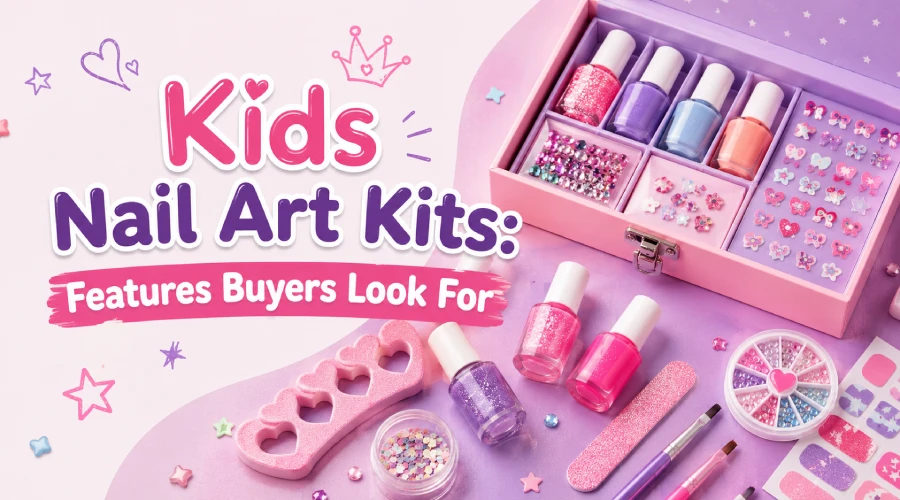
Why Are Kids Nail Art Kits So Popular?
Kids nail art kits combine two major consumer trends:
- Creative play
- Beauty-inspired activities
Parents often view nail art kits as a hands-on activity that encourages creativity, while children enjoy designing colorful nail looks and sharing the experience with friends and family.
As a result, nail art kits have become popular across:
- Toy retailers
- Children’s beauty brands
- Gift stores
- E-commerce platforms
- Seasonal and holiday collections
However, not all kits perform equally well in the market.
The products that attract repeat purchases usually meet specific buyer expectations.
What Features Do Buyers Look For in a Kids Nail Art Kit?
1. Safety Comes First
What Buyers Want
Parents are typically more concerned about safety than design or color variety.
They often look for:
- Child-friendly ingredients
- Gentle formulations
- Age-appropriate products
- Easy removal options
- Clear usage instructions
Why It Matters
Children have more sensitive skin and nails than adults.
A product that emphasizes safety can help build trust and increase purchase confidence.
Decision Rule
If the target audience is children under 10, safety messaging is usually more influential than trend-driven colors or packaging features.
2. Peel-Off or Washable Nail Polish
What Buyers Want
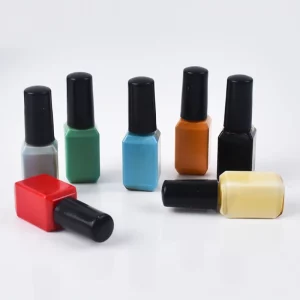
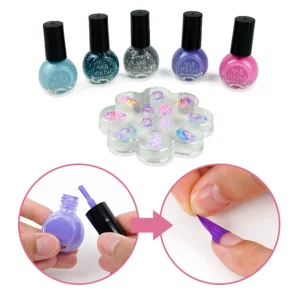
Many parents prefer nail products that can be removed easily without traditional nail polish remover.
Popular options include:
- Peel-off nail polish
- Water-based nail polish
- Washable nail color
Why It Matters
Easy removal creates a more convenient experience for both parents and children.
It also makes the kit more suitable for occasional play.
Decision Rule
If convenience is a major selling point, peel-off formulations often outperform traditional nail polish systems in children’s categories.
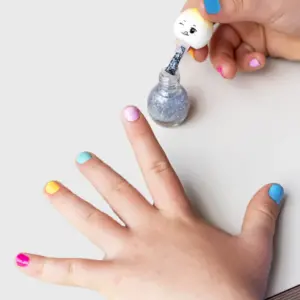
3. Easy Application for Small Hands
What Buyers Want
Children want products they can use independently.
Features that improve usability include:
- Ergonomic bottle designs
- Easy-grip caps
- Simple brushes
- Pre-designed nail stickers
- Quick-drying formulas
Why It Matters
Complicated products can lead to frustration and reduced engagement.
The easier the kit is to use, the more enjoyable the experience becomes.
Decision Rule
Products requiring minimal adult assistance typically receive stronger feedback from parents and children.
4. Nail Stickers and Decorative Accessories
What Buyers Want
Accessories often create more excitement than nail polish itself.
Popular additions include:
- Nail stickers
- Gems
- Glitter decorations
- Nail decals
- Press-on nails
- Decorative charms
Why It Matters
Accessories increase perceived value without significantly increasing manufacturing costs.
They also encourage creativity and repeated use.
Decision Rule
A kit with multiple decoration options often appears more attractive than a kit offering only additional polish colors.
5. Fun Color Selection
What Buyers Want
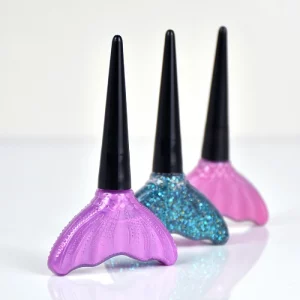
Children generally prefer:
- Pink
- Purple
- Blue
- Glitter shades
- Pastel colors
- Color-changing effects
The exact color trends may vary by market and season.
Why It Matters
Color variety is often one of the first elements children notice when selecting a kit.
Decision Rule
Offering 4–8 carefully selected colors usually creates a better user experience than including a large number of similar shades.
6. Gift-Ready Packaging
What Buyers Want
Many nail art kits are purchased as gifts.
Common gifting occasions include:
- Birthdays
- Christmas
- Easter
- Back-to-school rewards
- Children’s parties
Why It Matters
Packaging significantly influences purchase decisions, especially online.
Attractive packaging can increase perceived value before the product is even opened.
Decision Rule
If the product is intended for gifting, packaging quality often has a greater impact on sales than adding extra accessories.
7. Complete Play Experience
What Buyers Want
Many consumers prefer kits that provide a complete activity rather than a single product.
A complete kit may include:
- Nail polish
- Nail stickers
- Nail file
- Decorative gems
- Toe separators
- Storage case
Why It Matters
Parents often look for products that can keep children engaged for longer periods.
Decision Rule
The best-selling kits usually offer an activity experience rather than just a collection of nail products.
What Features Matter Most to Retail Buyers?
Retail buyers often evaluate products differently from consumers.
Their priorities commonly include:
Key Insight
Retail buyers are generally interested in products that combine:
- Strong shelf appeal
- Competitive pricing
- Consistent quality
- Reliable supply
A kit with excellent packaging and clear positioning often performs better than one simply offering more components.
How Can Private Label Brands Stand Out?
The children’s nail art market is competitive, but differentiation opportunities remain.
Successful brands often focus on:
Unique Themes
Examples include:
- Princess collections
- Unicorn themes
- Mermaid themes
- Holiday editions
- Educational creativity kits
Custom Packaging
Private label packaging helps brands create stronger recognition and customer loyalty.
Exclusive Color Collections
Custom color combinations can help brands avoid direct price competition.
Seasonal Product Launches
Limited-edition kits can create urgency and encourage repeat purchases.
Manufacturing Considerations for Kids Nail Art Kits
Before launching a product line, brands should evaluate:
Product Safety
- Formula review
- Stability testing
- Microbiological testing
- Packaging compatibility
Regulatory Requirements
Requirements vary across:
- United States
- European Union
- United Kingdom
- Middle East
- Asia-Pacific markets
Production Flexibility
Growing brands often benefit from:
- Low MOQs
- Fast lead times
- Custom packaging options
- OEM and ODM services
Experienced manufacturers can help brands accelerate development while maintaining product consistency.

Guangdong AKIA Cosmetic Co., Ltd. has more than 40 years of cosmetic manufacturing experience and operates a 40,000-square-meter production facility in Foshan, China. The company supports private label children’s beauty products with flexible MOQ options, customized formulations, and efficient production timelines for both startups and established brands.
Conclusion
The most successful kids nail art kits are not necessarily the largest—they are the easiest, safest, and most enjoyable for children to use.
When evaluating or developing a children’s nail art kit, buyers typically prioritize:
- Safety
- Easy removal
- Simple application
- Creative accessories
- Attractive packaging
For private label brands, understanding these purchasing priorities can help create products that meet consumer expectations while standing out in a competitive children’s beauty market.