Short Answer:
For most children, pretend play makeup is the better choice because it is designed for imaginative play rather than cosmetic use. It reduces exposure to pigments, preservatives, fragrances, and other ingredients that may irritate sensitive skin. Real cosmetic makeup may be suitable for older children in specific situations, but it should only be used under adult supervision and selected according to relevant safety standards.
If you are developing a children’s beauty brand, the decision should be based on age group, intended use, safety requirements, and customer expectations, not just product appearance or market trends.
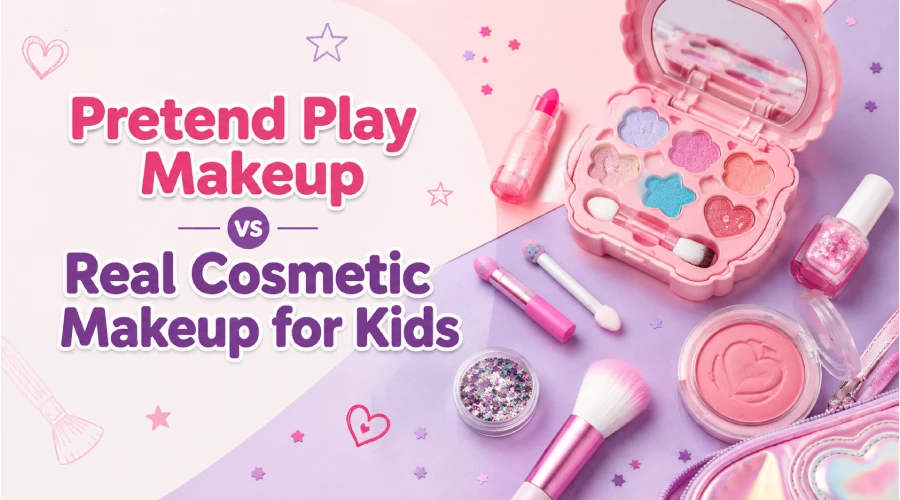
Quick Comparison: Pretend Play Makeup vs Real Cosmetic Makeup for Kids
Decision Rule:
If the product’s main goal is role-playing and entertainment, pretend play makeup is usually the better option. If the goal is actual cosmetic performance, real makeup may be necessary but requires stricter safety and compliance considerations.
What Is Pretend Play Makeup?
Pretend play makeup refers to products designed primarily for children’s imaginative activities, such as:
- Playing dress-up
- Role-playing as a princess, performer, or makeup artist
- Parent-child interactive games
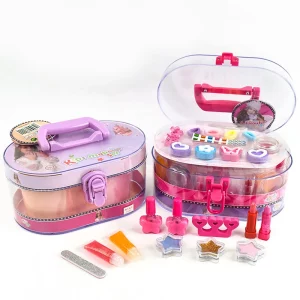
- Toy beauty sets
Depending on the design, pretend makeup may:
- Have little or no color transfer
- Use simulated cosmetic components
- Prioritize visual appearance over cosmetic performance
Many parents choose pretend play makeup because it allows children to participate in beauty-related activities without encouraging frequent cosmetic use.
Best For
- Toddlers
- Preschool children
- Early elementary-age children
- Gift and toy markets
What Is Real Cosmetic Makeup for Kids?
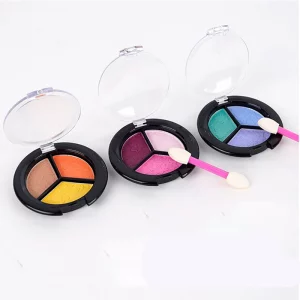
Real cosmetic makeup contains functional cosmetic ingredients intended to create visible effects on the skin.
Examples include:
- Lip gloss
- Blush
- Eyeshadow
- Face paint
- Makeup kits marketed for children
These products are designed to:
- Deliver actual color payoff
- Adhere to the skin
- Be removable after use
Because these products directly contact the skin, manufacturers must pay closer attention to:
- Ingredient safety
- Microbiological quality
- Heavy metal control
- Stability testing
- Regulatory compliance
Best For
- Special occasions
- Performances
- Photoshoots
- Older children under supervision
Which Option Is Safer for Children?
In Most Cases: Pretend Play Makeup
For younger children, pretend play makeup generally presents fewer concerns because:
- It minimizes direct cosmetic exposure.
- It supports creative development without daily cosmetic use.
- Parents often perceive it as a safer introduction to beauty-related play.
When Real Makeup Can Be Appropriate
Real cosmetic makeup may be suitable when:
- The child is older.
- Products are specifically formulated for young users.
- Adult supervision is provided.
- The product complies with applicable cosmetic regulations.
Simple Evaluation Framework
Ask these four questions:
- How old is the child?
The younger the child, the stronger the case for pretend play products.
- Is skin contact necessary?
If not, pretend play products may be sufficient.
- What is the use scenario?
Daily play differs from stage performances or special events.
- What level of safety verification is expected?
Real cosmetics require more comprehensive testing and compliance management.
What Do Parents Usually Prefer?
Consumer preferences vary by region, but several purchasing patterns are common:
Parents of Younger Children
Typically look for:
- Safe play experiences
- Easy supervision
- Age-appropriate products
- Simple ingredients or non-cosmetic alternatives
Parents of Older Children
Often prioritize:
- Cosmetic performance
- Washability
- Product quality
- Safety certifications
Market Insight
Many successful children’s beauty brands offer both categories:
- Pretend play lines for younger children
- Real cosmetic lines for older age groups
This approach helps brands serve multiple customer segments while maintaining clear positioning.
How Should Brands Choose Between Pretend Play and Real Makeup?
For private label brands, the choice should be based on business objectives.
Choose Pretend Play Makeup If You Want To:
- Enter the toy or gift market
- Target preschool-age children
- Emphasize educational or creative play
- Reduce formulation complexity
Choose Real Cosmetic Makeup If You Want To:
- Build a children’s cosmetics brand
- Sell functional beauty products
- Target older children and tweens
- Create higher-value beauty collections
Choose Both If You Want To:
- Expand product categories
- Reach multiple age groups
- Increase customer lifetime value
- Build a complete children’s beauty ecosystem
Manufacturing Considerations for Private Label Brands
Before launching either category, evaluate:
Product Safety
- Ingredient review
- Stability testing
- Microbiological testing
- Packaging safety assessment
Regulatory Compliance
Requirements differ across markets such as:
- United States
- European Union
- United Kingdom
- Middle East
- Southeast Asia
Product claims should always align with the intended use of the product.
Scalability
Startups and growing brands often benefit from:
- Low minimum order quantities
- Flexible formulation options
- Fast production timelines
- Custom packaging development
Working with an experienced manufacturer can help simplify product development while supporting future growth.
Why Many Emerging Brands Work With Experienced OEM/ODM Manufacturers
Children’s beauty products require a balance between:
- Product safety
- Regulatory awareness
- Attractive packaging
- Cost control
- Consistent manufacturing quality
Manufacturers with long-term cosmetic production experience are often better equipped to support formulation development, testing coordination, packaging customization, and scale-up production.

Guangdong AKIA Cosmetic Co., Ltd. operates a 40,000-square-meter manufacturing facility in Foshan, China and brings more than 40 years of cosmetic manufacturing experience. The company supports private label, OEM, and ODM projects with low MOQ options and efficient lead times, making it suitable for both startups and established beauty brands.
Conclusion
If the goal is imaginative play, choose pretend play makeup. If the goal is cosmetic performance, choose real makeup.
For brands, the decision should follow a simple framework:
- Targeting younger children → Pretend play makeup
- Targeting older children → Real cosmetic makeup
- Targeting multiple age groups → Offer both categories
The most successful children’s beauty brands are not defined by product type alone. They succeed by matching product design, safety expectations, and customer needs to the right age group and use scenario.