Private Label Kids Makeup Kit Development Guide
Table of Contents
A private label kids makeup kit is not simply a group of colors placed in a decorative case. It is a multi-component product program in which the formula, pans, bottles, applicators, inserts, case, artwork, labels, and retail presentation must work together.
For toy brands, retailers, stationery chains, and supermarket buyers, the quality of the initial brief has a direct effect on quotation accuracy and sample efficiency. Before contacting a kids cosmetics OEM manufacturer, define the decisions below.
1. Start With the Retail Role
First decide where the kit will sit and what job it will perform. A compact impulse item, a birthday gift, a travel case, and a large activity set require different product counts, packaging structures, and price architectures.
Your brief should identify the sales channel, expected shelf position, target retail tier, gifting or activity concept, and destination market. These choices give the manufacturer a practical framework for recommending existing components or evaluating custom development.
2. Build a Coherent Product Mix
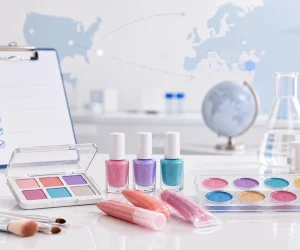
A children’s makeup kit may combine eyeshadow, blush, lipstick, gel lip balm, face-paint crayons, or peel-off water-based nail polish. More items do not automatically create a better kit. Each product should support the play concept and fit the available package space.
Use a simple product matrix that records the item type, number of shades, fill format, component, location in the kit, and intended use. Buyers can review the current kids makeup product range to identify a useful starting direction before requesting changes.
3. Map Every Component and Accessory
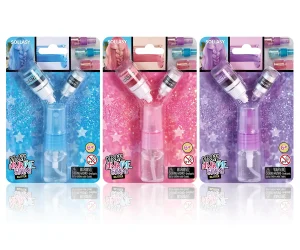
The component list often extends beyond the visible cosmetics. It can include pans, wells, lipstick mechanisms, nail-polish bottles and brushes, mirrors, applicators, stencils, stickers, internal trays, protective films, closures, handles, hinges, and outer cartons.
Create a bill-of-materials style checklist early. This exposes fit issues and prevents an accessory from being added after the insert and case dimensions are already fixed. It also clarifies which parts require artwork, color matching, or individual packing.
4. Compare Existing Components With Custom Molds
Existing case and component options usually provide a faster route to sampling because their basic geometry is established. A new mold can create a distinctive silhouette or layout, but it adds engineering decisions, tooling cost, approval stages, and quantity implications.
Ask which parts can use existing tooling, which decorative changes are possible without a new mold, and which design features genuinely require one. Reserve custom tooling for features that materially improve the retail concept or brand ownership.
5. Define Packaging and Artwork as a System
The case, insert, label, carton, display, and shipping configuration must be planned together. Confirm the printable areas, decoration method, color references, legal-copy space, barcode area, warning area, and language versions before final artwork.
Do not treat character art or licensed themes as generic decoration. Buyers should control the rights and approvals for any licensed or third-party artwork supplied to a manufacturer.
6. Identify Market Documentation Before Development
Children’s cosmetic and toy-related requirements depend on the product, intended use, age grading, claims, and destination market. A report or document for one configuration should not be assumed to cover a different formula, component, or kit.
State the destination countries and sales channel in the first brief. Then ask what specifications, samples, labels, and documents must be reviewed for that exact program. Keep compliance wording out of packaging until the relevant scope has been confirmed.
7. Use Clear Sample and Approval Gates
A practical approval path separates concept review, component confirmation, formula or shade samples, assembled packaging samples, artwork proofs, and pre-production approval. Record open items at every stage instead of relying on general comments such as “looks good.”
Acceptance criteria may include shade references, appearance, component operation, fill presentation, insert fit, print position, pack completeness, and any agreed product-specific checks. The approved sample should match the written specification.
8. Plan Quantity and Timing Realistically
The general factory MOQ reference is 3,000 pieces, but a children’s kit may require a higher quantity when it uses custom molds, numerous accessories, or packaging parts with separate supplier minimums. Exact quantities must be confirmed for the selected configuration.
These projects also require more coordination than a simple single-item cosmetic. Build the purchasing plan around the number of components, tooling needs, artwork versions, documentation, samples, and approval rounds. Ask for a project schedule only after the specification is sufficiently defined.
Buyer-Ready RFQ Checklist
- Company, brand, and buyer contact
- Destination market and sales channel
- Kit concept and target retail tier
- Product types, shade count, and preferred formats
- Case, insert, applicator, and accessory requirements
- Existing-component or custom-mold preference
- Packaging reference and artwork status
- Forecast quantity and required selling window
- Required product and market documentation
A structured brief lets the supplier identify feasibility questions before the first sample. To discuss a program, send these inputs through the kids cosmetics inquiry page.
FAQ
Include the target market, sales channel, product mix, packaging format, accessories, artwork needs, quantity, and required launch window.
Yes. A kit can combine items such as eyeshadow, blush, lipstick, gel lip balm, face-paint crayons, or water-based nail polish, subject to product-specific review.
A custom mold may be needed when available component shapes cannot deliver the required case structure, theme, or product layout.
The general factory reference is 3,000 pieces, but complex kits, custom molds, and accessory requirements may result in a higher project-specific MOQ.
Approve the product specification, shades, component fit, packaging, artwork, labels, samples, and agreed acceptance criteria.