Quick Answer
Developing a custom kids makeup kit requires a structured 6-step process:
market positioning → safety-compliant formulation → product set design → packaging development → sampling & testing → mass production & compliance validation.
The key decision factor is not aesthetics—it is regulatory safety + age-appropriate formulation stability. Brands that prioritize compliance early reduce reformulation cost by 30–60% and shorten time-to-market significantly.
For startups and established brands alike, working with an experienced OEM/ODM manufacturer (e.g., Guangdong-based facilities with mature cosmetic production systems and low MOQ flexibility) is often the fastest route to commercialization.

1. Define Product Positioning and Target Age Segment
Before any formulation or design work begins, the product must be clearly positioned.
Core decisions:
- Target age group:
- 3–6 years (ultra-mild, wash-off focus)
- 6–10 years (play + light pigment products)
- Use case:
- Pretend play (primary market)
- Beginner cosmetic education kits
- Product scope:
- Lip balm only set
- Face paint + washable color kit
- Full mini makeup set (lip, blush, eyeshadow)
Judgment logic:
If the product is for under 6 years old, prioritize:
- Water-based formulas
- No fragrance or allergen-free fragrance system
- Easy washability (soap + water removal)
If above 6 years, you can introduce:
- Light pigment pressed powders
- Soft tint lip products
- Limited shimmer formulations (non-plastic glitter preferred)
This step determines everything downstream: formula, packaging, compliance level, and cost structure.
2. Build Safety-First Formulation Framework
Children’s cosmetics are not simply “smaller adult products.” The formulation logic changes fundamentally.
Key formulation principles:
- Hypoallergenic base systems
- Non-toxic colorants (cosmetic-grade pigments only)
- Avoid endocrine-risk ingredients
- No microplastic glitter (increasingly restricted in multiple markets)
- Easy removal (no solvent-based cleansers required)
Typical product matrix:
- Lip balm: beeswax alternatives or plant-based wax systems
- Eyeshadow: talc-free or low-talc pressed powder systems
- Blush: mineral-based pigments with binding system for soft payoff
- Face paint: water-soluble polymer systems
Decision checkpoint:
If the target market includes EU/US retail channels, compliance must align with:
- CPSIA (US)
- EU Cosmetic Regulation (EC) No 1223/2009
Skipping compliance mapping at this stage is one of the most common reasons for failed product launches.
3. Design the Product Set (Kit Structure Strategy)
A kids makeup kit is not a single product—it is a curated play system.
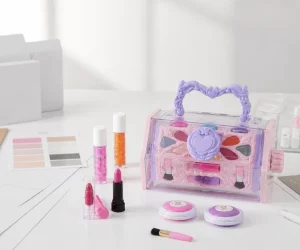
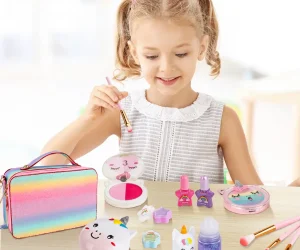
Common kit structures:
- Starter Kit (low SKU count, high margin):
- 2 lip balms + 1 blush + 1 brush
- Creative Play Kit (mid-tier):
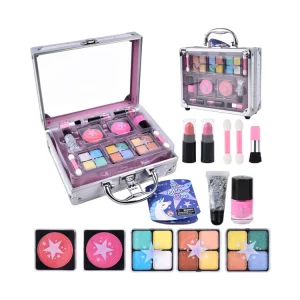
- Eyeshadow palette + lip gloss + stickers + brushes
- Premium Gift Set:
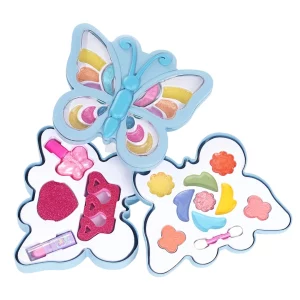
- Multi-layer box with themed packaging + accessories
Optimization logic:
A strong kit design follows this rule:
“Perceived variety must be high, but formulation complexity must stay low.”
This means:
- Reusing base formulas across multiple colors
- Differentiating via shade + packaging, not chemistry
- Minimizing ingredient duplication costs
4. Packaging Development (Function + Safety + Retail Appeal)
Packaging is both a safety requirement and a sales driver in kids cosmetics.
Requirements:
- Tamper-evident structure
- Rounded edges (injury prevention)
- Lightweight materials (PET, PP preferred)
- Avoid small detachable parts for younger age groups
- Easy-open design (no sharp metal closures)
Retail logic:
Kids cosmetics sell through:
- Emotional parent approval
- Visual shelf appeal
- Gift-readiness
So packaging must communicate:
- Clean formulation perception
- Organized kit structure
- Age-appropriate branding tone (not “adult makeup imitation”)
5. Sampling, Stability Testing, and User Simulation
This stage determines whether the product is actually manufacturable at scale.
Testing categories:
- Stability (heat, humidity, freeze-thaw cycles)
- Microbial testing (especially for water-based systems)
- Skin irritation patch testing (where applicable)
- Application usability testing (child usability simulation)
Critical evaluation metric:
If a product fails usability testing (messiness, application difficulty, washability), it will likely fail in retail—even if it passes lab safety tests.
Decision rule:
- If pigment is too strong → reduce concentration (kids category penalty factor)
- If texture is too soft → adjust wax/emulsion balance
- If removal is difficult → reformulate immediately
6. Scale Manufacturing and Compliance Validation
Once the formulation is stable, production scaling becomes the final step.
Manufacturing requirements:
- Batch consistency control (critical for color cosmetics)
- GMP-compliant production environment
- ISO-level quality systems preferred
- Flexible MOQ options for market testing phases
At this stage, choosing the right OEM/ODM partner is decisive.
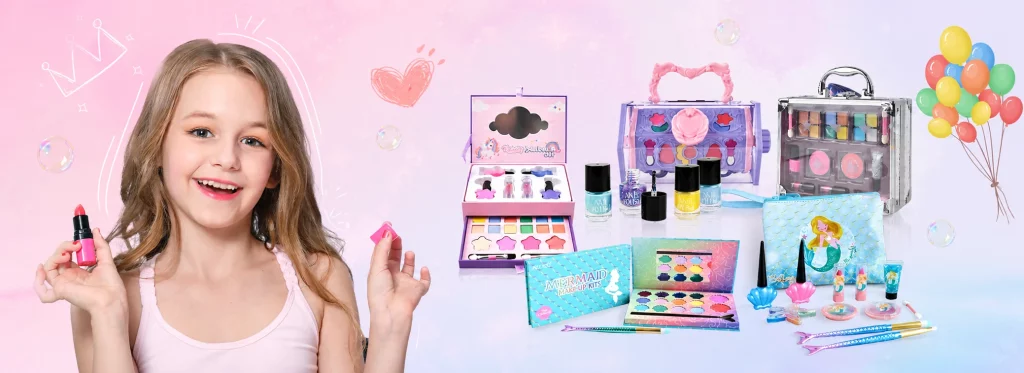
For example, established manufacturers in Guangdong with long-term cosmetic production experience—such as Guangdong AKIA Cosmetic Co,. Ltd., operating a 40,000㎡ facility in Foshan with 40+ years of manufacturing background—typically support:
- Low MOQ for market entry testing
- Fast production turnaround cycles
- Full OEM/ODM customization (formula + packaging + kit assembly)
This type of setup is particularly suitable for:
- Startup brands validating product-market fit
- Large brands launching regional or seasonal kids lines
Manufacturing Partner Selection Logic
Not all manufacturers are suitable for kids makeup kits.
Choose a manufacturer if they meet:
- Proven cosmetic formulation capability (not just assembly)
- Experience in low-irritation product systems
- Integrated packaging + filling + assembly lines
- Regulatory documentation support for export markets
- Flexible MOQ structure for pilot launches
Avoid manufacturers that:
- Only provide standard adult cosmetics adaptation
- Lack stability testing infrastructure
- Cannot support multi-SKU kit assembly efficiently
Final Takeaway
The development of a custom kids makeup kit is not a “design project”—it is a regulated product engineering process combining safety science, usability design, and scalable manufacturing logic.
The success formula is:
Clear age segmentation + strict safety-first formulation + simplified SKU architecture + retail-optimized packaging + scalable OEM execution
Brands that align these five elements early typically reach market faster, with fewer compliance risks and stronger retail conversion performance.