Many parents worry after seeing redness, dryness, or stinging when makeup is removed. Kids may complain that their eyes burn or their skin feels tight. These reactions raise a fair question: is the remover too strong, or is any remover unsafe for kids?
Another reason is confusion. Adult makeup removers are everywhere, but clear guidance for children is limited. Labels often say “gentle,” yet they are tested on adult skin. Parents want a clear rule, but science usually gives a cautious “it depends.”
Common Situations Where Kids Wear Makeup
Makeup use in children is often short-term and situation-based. It usually comes from school, play, or simple accidents at home. Each case brings different types of products and different levels of skin stress, which affects how removal should be handled.
School performances and stage makeup
School plays and dance shows often use stage makeup. These products are thicker and harder to wash off with water alone. After long wear, sweat and friction can weaken a child’s skin barrier, making removal more risky.
Parents often remove this makeup late at night, when kids are tired. Rushing or rubbing too hard can increase irritation, even if the remover itself seems mild.
Play makeup and face painting
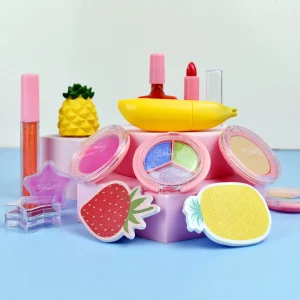
Play makeup and face paint are common at parties or during pretend play. While many are labeled for children, they can still cling to skin, especially around the eyes. Bright pigments may need extra wiping to come off.
The problem is not just the product, but repetition. Frequent use and removal, even with gentle products, can slowly dry the skin if no care is taken afterward.
Accidental exposure to adult cosmetics
Kids sometimes experiment with adult makeup left within reach. These products may be long-lasting or waterproof. When parents discover this, they often use the nearest remover without checking ingredients.
This is a high-risk moment. Adult cosmetics and removers are designed as a system. Using them on children, even once, can cause short-term irritation or delayed reactions the next day.
How Children’s Skin Is Different from Adult Skin
Children’s skin may look smooth and strong, but it is still under construction. The outer layers are thinner, and the barrier that protects against chemicals is not fully mature. Because of this, substances on the skin surface can pass through more easily than they do in adults.
This difference explains why products that seem fine for grown-ups may cause issues for kids. Makeup removers are designed with adult skin in mind, so understanding these biological gaps is key before using them on children.
Structural Differences in Children’s Skin Barrier
A child’s outer skin layer, the stratum corneum, is thinner and holds less natural oil. This layer acts like a wall. In kids, the wall has more gaps. As a result, water is lost faster, and chemicals can enter more easily.
Also, the bond between skin cells is weaker in early years. This makes children more prone to dryness and irritation when exposed to cleansers that remove oil or disturb skin balance.
Why Kids Are More Sensitive to Makeup Removers
Makeup removers often rely on surfactants to lift pigment and oil. On adult skin, this is usually tolerated. On children’s skin, the same action can strip away needed lipids too quickly.
In addition, children have a higher skin surface area relative to body size. This means exposure, even in small amounts, can have a stronger effect. Stinging or redness is often the first sign.
The Long-Term Impact of Harsh Cleansing on Kids’ Skin
Repeated use of strong cleansers can change how a child’s skin reacts over time. Early irritation may fade fast, but the skin can become more reactive with repeated stress. This is called sensitization.
Studies in pediatric dermatology note that early barrier damage may raise the risk of eczema later in childhood (Fluhr et al., Pediatric Dermatology, 2012). While one use may not cause harm, patterns matter more than single events.
What Is Makeup Remover Made Of?
Makeup removers work by breaking the bond between makeup and skin. To do this, they use a mix of cleansing agents, liquids, and stabilizers. These formulas are designed for adult skin, which can better tolerate repeated chemical contact.
For children, the concern is not just what an ingredient does, but how often and how long it stays on the skin. Even rinse-off products can interact with a child’s weaker skin barrier.
Common Ingredients Found in Makeup Removers
Most makeup removers share a similar structure. They combine agents that lift oil-based makeup with liquids that carry those agents across the skin. Some also include additives to improve smell or shelf life.
Surfactants and cleansing agents
Surfactants are the main cleaning tools. They surround oil and pigment so they can be wiped away. Common types include nonionic and amphoteric surfactants, which are often labeled as mild.
However, even mild surfactants can remove natural oils from children’s skin. If left on too long or used with friction, they may lead to dryness or tightness.
Solvents and emulsifiers
Solvents dissolve makeup, especially waterproof products. Oils and alcohol-based solvents are common. Emulsifiers help oil and water mix so the formula stays stable.
For kids, strong solvents can increase penetration of other ingredients. This may raise the chance of irritation, even if the product is quickly wiped off.
Preservatives and fragrance components
Preservatives prevent bacterial growth. Fragrance components improve scent and user appeal. Both are used in small amounts, but they are among the top causes of contact reactions.
Children are more likely to react to fragrance due to immature immune responses. This is why fragrance-free matters more for kids than for adults.
Ingredients That Raise Concerns for Children
Certain ingredients deserve extra caution when used on children. High levels of alcohol can dry the skin fast. Strong solvents may disrupt the barrier. Fragrance blends increase allergy risk.
Dermatology reviews note that repeated exposure to irritants in early life may increase skin sensitivity later (European Society of Contact Dermatitis, 2019). The issue is not one ingredient alone, but how they work together on young skin.
Potential Risks of Using Makeup Remover on Kids
Using makeup remover on children is not always dangerous, but it does carry risks. These risks depend on the product, the child’s age, and how often it is used. Because children’s skin absorbs substances more easily, even small mistakes can have visible effects.
Skin Irritation, Redness, and Allergic Reactions
The most common reaction is irritation. Skin may turn red, feel warm, or become dry soon after use. This often happens when removers contain strong surfactants or fragrance.
Allergic reactions are less common but more serious. They may show as itching, swelling, or small bumps. These reactions can occur even after prior safe use, since allergies can develop over time.
Eye and Mucosal Safety Concerns
Makeup removers are often used near the eyes. In children, the eye area is thinner and more reactive. If remover enters the eye, it can cause burning, tearing, or redness.
There is also a risk to the lips and nose area. These zones connect to mucosal tissue, which absorbs chemicals faster than normal skin. This makes ingredient choice and gentle use critical.
Cumulative Exposure and Sensitization Over Time
One-time use rarely causes lasting harm. The bigger issue is repeated exposure. Each use can slightly weaken the skin barrier, even if no reaction is obvious at first.
Over time, this may lead to sensitization. The skin becomes more reactive to products that were once tolerated. Pediatric dermatology literature notes this pattern in children with frequent cleanser exposure (Cork et al., British Journal of Dermatology, 2009).
Is Makeup Remover Safe for Kids of All Ages?
Safety is not the same at every age. A child’s skin changes fast in the first years of life. Thickness, oil production, and immune response all develop over time. Because of this, age matters more than many parents expect.
Instead of a single rule, it is better to look at risk by age group. What may be tolerated at ten years old may not be safe at two.
Infants and Toddlers (0–3 Years)
In this age group, the skin barrier is very immature. The outer layer is thin, and water loss is high. This makes infants more likely to react to even small amounts of cleanser.
From a medical view, makeup remover should be avoided at this stage. Accidental exposure should be handled with very gentle cleansing and minimal rubbing, especially around the eyes and mouth.
Preschool and Early School Age (4–7 Years)
Skin at this age is stronger but still sensitive. Children may start using face paint at events or school activities. Removing these products can be challenging, which tempts parents to use adult removers.
Occasional use may not cause harm, but reactions are still possible. Careful technique and limited frequency matter more than the product itself during these years.

Older Children and Preteens (8–12 Years)
By this stage, the skin barrier is closer to adult levels, though not fully mature. Some children begin experimenting with cosmetics, often using products meant for adults.
Makeup remover use is less risky than in younger kids, but it still needs caution. Eye areas remain sensitive, and repeated use can still lead to dryness or irritation over time.
When It May Be Necessary to Remove Makeup from a Child
In an ideal setting, children would rarely need makeup remover. In real life, some situations leave few options. The key is knowing when removal is necessary and when it can wait or be done more gently.
Heavy Stage Makeup or Face Paint
Stage makeup is made to last under heat and light. It often contains dense pigments and waxes. Water alone may not remove it fully, especially around the eyes and hairline.
Leaving this makeup on overnight can trap sweat and dirt. In these cases, careful removal is reasonable. The goal is to reduce residue without scrubbing or repeated passes over the same skin.
Waterproof or Long-Lasting Cosmetics
Waterproof makeup resists sweat and tears. These products bind tightly to skin and lashes. For children, this creates a challenge because strong removers are often needed.
If removal is required, it should be done slowly and in short steps. Rushing increases friction, which can cause more irritation than the makeup itself.
Medical or Hygiene-Related Reasons
Sometimes makeup must be removed for health reasons. Skin irritation, infection risk, or upcoming medical care may require clean skin.
In these cases, the focus should be safety, not speed. Gentle handling and limiting contact with sensitive areas help lower the chance of added skin stress.
How to Choose a Makeup Remover If It Must Be Used on Kids
If makeup remover cannot be avoided, choosing carefully becomes important. No product is risk-free for children, but some choices lower the chance of problems. The goal is not deep cleaning, but safe and limited removal.
Reading Labels with Children’s Safety in Mind
Labels can be confusing. Words like gentle or mild are not medical terms. They do not guarantee safety for children. Instead, ingredient lists give more useful clues.
Short lists are easier to judge. If a label lists many fragrance compounds or strong solvents, caution is needed. When in doubt, simpler formulas tend to cause fewer reactions.
Key Properties to Look For in a Child-Appropriate Makeup Remover
A suitable remover for children should focus on basic function. It should lift makeup without forcing the skin to work too hard. Texture and feel matter less than how the skin reacts after use.
Parents should avoid assuming that products made for sensitive adult skin are automatically safe for kids. Children are a separate group with different needs.
Minimal ingredient lists
Fewer ingredients mean fewer chances for irritation. Each added substance increases the chance of interaction with a child’s skin.
From a clinical view, simple formulas are easier to monitor. If a reaction occurs, it is also easier to identify the possible cause.
Fragrance-free and alcohol-free formulations
Fragrance is a common trigger for skin reactions in children. Even natural scents can irritate or sensitize young skin.
Alcohol can remove oil quickly and dry the skin. For children, this may weaken the barrier and lead to redness or tightness after cleansing.
The Importance of Patch Testing on Children
Patch testing is often skipped, but it matters more for kids. Children may not explain early discomfort clearly, so testing reduces surprise reactions.
A small amount applied to a limited area and observed over time can reveal irritation. This step is simple, slow, and far safer than full-face use.
Safer Makeup Removal Practices for Children
When makeup must be removed, how it is done often matters more than what is used. Children’s skin responds strongly to pressure, time, and friction. Even a mild product can cause problems if the method is rough.
Safer practices focus on slowing down. Fewer wipes, lighter touch, and clear steps help protect the skin barrier during and after cleansing.
Gentle Techniques to Minimize Skin Stress
Rubbing is the main cause of irritation. Instead of scrubbing, the remover should be held on the skin briefly to loosen makeup. Then it can be lifted away with light pressure.
Soft cloths or cotton pads work better than textured wipes. The eye area needs extra care. Pulling the skin can cause redness that lasts longer than expected.
Frequency — How Often Is Too Often?
Makeup removal should not be a daily routine for children. The skin needs time to recover after each exposure to cleansers.
Frequent removal, even with mild products, can slowly weaken the barrier. If makeup use becomes regular, it is a sign to reassess both the products and the habit itself.
After-Cleansing Skin Care for Kids
After cleansing, skin often feels dry or tight. This means water and oil have been lost. Gentle care helps restore balance.
Rinsing off residue and keeping the skin clean and calm is usually enough. The goal is recovery, not adding more products or steps.
Helping Kids Develop Healthy Skin Habits Early
Focusing on respect for the skin rather than strict rules helps kids learn to protect it naturally.
Teaching Children About Skin Care Without Fear
Children respond better to simple explanations than warnings. Explaining that skin needs gentle washing and moisturizing helps them understand why products matter.
Use clear examples, like explaining how harsh rubbing can make skin sore. This encourages curiosity and awareness instead of worry.
Setting Boundaries Around Makeup Use
Boundaries help prevent overexposure to products. Limiting makeup to special occasions reduces the need for repeated removal and potential irritation.
Parents can involve children in setting rules, such as which products are allowed and when, giving a sense of responsibility while protecting the skin.
Encouraging Skin Respect and Body Awareness
Children should learn to notice how their skin reacts. Redness, dryness, or itching can signal a product is too strong or used too often.
Encouraging observation and communication helps children develop lifelong habits. Understanding their own body builds confidence and reduces unnecessary exposure to potentially irritating products.
Conclusion
In summary, using makeup remover on children is not automatically safe. Their skin is thinner, more sensitive, and reacts differently than adult skin. While occasional removal may be necessary for stage makeup or special occasions, it should always be done gently, with simple, fragrance-free products, and minimal friction.
Teaching kids healthy skin habits early helps prevent irritation and builds awareness for safe skincare in the future.