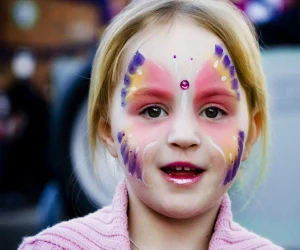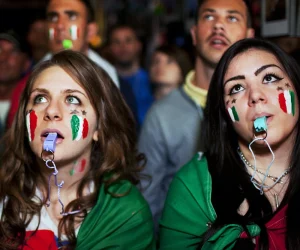
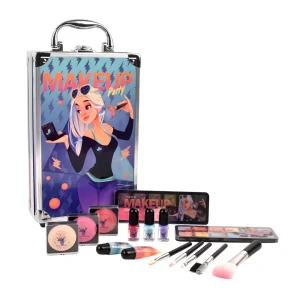
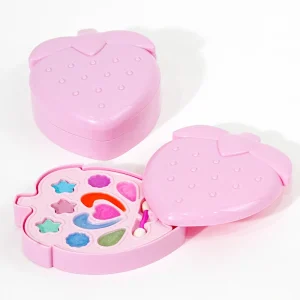
Play makeup for kids refers to toy cosmetics made for pretend beauty play. These items are meant for role-play rather than serious grooming. They can look very real, yet the purpose is creative expression and social learning. Because children have thinner skin and different habits, the safety questions are not trivial, and parents often wonder how these toy products compare to real cosmetics.
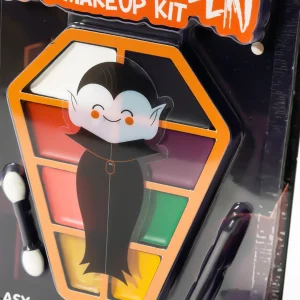
How Play Makeup Differs from Adult Makeup
Play makeup for kids is made for light use and short wear. It is usually softer in color and easier to wash off. Adult makeup is made to last longer and often uses stronger pigments or adhesives. These differences matter because children touch their faces more and may rub their eyes or put their fingers in their mouths.
Kids also tend to share play makeup during pretend play. A group of cousins may sit on the floor, painting glitter on cheeks and swapping brushes. It feels harmless, but the behaviors around toy cosmetics are not the same as adult patterns. This is why safety standards are often built with those behaviors in mind (FDA, “Cosmetics,” 2023).
Intended Developmental Uses of Play Makeup
Play makeup for kids is mainly part of role-play. This type of play helps children practice social scripts, like “getting ready” or “going to a party.” It is similar to toy kitchens or doctor kits. The goal is learning through imitation, not beauty enhancement.
But even simple pretend routines can involve many steps: picking colors, applying product, looking in a mirror, and cleaning up. These tasks support fine motor skills and sequencing. None of this requires actual cosmetic performance, which is why the formula does not need to perform like real makeup.
Why Kids Love Pretend Beauty Play
Many kids enjoy play makeup because it gives them a small sense of control and creativity. Choosing colors and adding sparkles feels like decorating a canvas. The mirror then becomes a feedback loop, and the result is often met with giggles rather than judgment.
Plus, beauty play taps into curiosity about adults. Kids often watch grown-ups get ready for work or events and want to try the same routine “just like mom” or “just like dad.” It is not about beauty standards at that age; it is about understanding how the world works through imitation, which is well-documented in developmental psychology (Bandura, 1977).
Is All Play Makeup Safe for Kids?
Not all play makeup for kids is created the same. Some products are tested like real cosmetics, while others function more like generic toys with color.
Regulatory Testing vs. Non-Regulated Products
Some play makeup for kids follows cosmetic testing rules. These rules check for things like irritation and microbial growth before a product reaches stores. In contrast, non-regulated toy cosmetics may only focus on choking hazards or general labeling, not skin contact.
One challenge is that online marketplaces make it easy for untested items to circulate. A parent may order a glitter palette for a birthday, only to learn after the fact that it has no cosmetic certification. This gap can confuse buyers who assume anything for kids must be screened by an authority.
The Concept of “Kid-Safe” Standards
A “kid-safe” label can sound comforting, but it does not always mean there is a global standard behind it. Some countries use cosmetic safety frameworks, while others rely on toy safety rules. The term itself may come from marketing language rather than formal testing.
Children have thinner skin and higher hand-to-mouth behavior, so safety standards often consider accidental ingestion and eye exposure. This is different from adult cosmetics, where long wear and color stability matter more. Pediatric dermatology reviews note that contact dermatitis is more common in younger users due to barrier function differences (Kramer et al., Pediatrics, 2019).
Global Variations in Safety Requirements
Safety for play makeup for kids varies by region. The U.S. FDA regulates cosmetics differently from the EU, which uses pre-market safety assessments. Meanwhile, some other markets rely on self-certification or import declarations.
This means two products that look the same may follow completely different rules. A compact with pastel blush sold in London may need documented ingredient safety data, while a similar item sold elsewhere may only need basic labeling and age markings. For parents, this mix of systems can make risk hard to compare across borders.
Common Ingredients Found in Play Makeup
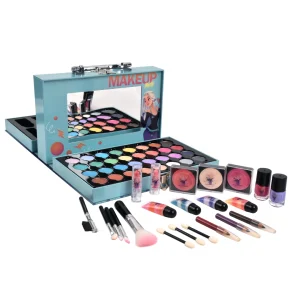
Play makeup for kids can look simple, but the ingredient lists can cover several functional groups.
Pigments and Colorants
Pigments give play makeup for kids its bright shades. Approved mineral and synthetic colorants are common because they spread well and wash off easily. In adult cosmetics, pigments are chosen for staying power, but in toy cosmetics the focus is often ease of removal.
Kids sometimes swipe color near the eyes or mouth during pretend play, so pigment selection matters. Regulatory bodies in many countries restrict certain dyes to avoid irritation or heavy metal contamination. Toys with craft pigments or non-cosmetic glitters are more likely to raise concerns during dermatology consultations.
Preservatives and Stabilizers
Preservatives keep play makeup for kids from growing bacteria or mold. Since many toy cosmetics use water-based gels or creams, microbes can multiply if the formula sits open or shared between children. Stabilizers help the product stay mixed so the texture does not separate during use.
Preservative types vary. Some have long safety histories, while others are limited to certain concentrations. Dermatology studies note that preservatives are among the more common allergen triggers in children with contact dermatitis (Jacob et al., Dermatitis, 2021). Because sharing is common in pretend play, preservatives help reduce risk, but they also add variables for sensitive skin.
Fragrances and Flavoring Agents
Some play makeup for kids adds fruity scents or mild flavors to boost the fun factor. These ingredients make pretend beauty routines feel more immersive, especially when lip balms smell like candy or berries. However, fragrance chemistry is complex and varies across markets.
Fragrance compounds are a frequent cause of irritation in pediatric skin clinics, especially when applied repeatedly or near the mouth. Flavor additives can also attract licking, which increases accidental ingestion. These behaviors do not make the ingredients unsafe by definition, but they change how exposure happens during play.
Potential Safety Risks
When it comes to play makeup for kids, safety is not only about ingredients. It also involves how children use the products. Kids touch their faces more, rub their eyes, share tools, and may even taste flavored items. These behaviors can change the exposure path, and some are not typical in adult cosmetic use. So, safety questions often involve skin contact, ingestion, and hygiene.
Allergic Reactions and Irritation
Even mild play makeup for kids can trigger skin irritation in some users. The common signs include redness, itching, or dry patches. These reactions may appear soon after use or later in the day, depending on sensitivity and product type.
Allergic contact dermatitis is less common but still documented in pediatric dermatology. It occurs when the immune system reacts to a specific compound. Preservatives, fragrances, and dyes are among the top triggers noted in clinical reports, especially in children with a family history of eczema or allergies.
Eye Area Sensitivity Concerns
The skin around the eyes is thin and more reactive. During pretend play, kids often place glitter shadows or liners very close to the eyelid margins. This increases the chance of irritation, especially if the particles migrate into the tear film.
Parents sometimes notice tearing or rubbing after eye play sessions. Most cases are mild, but the discomfort shows why the periocular region is viewed as higher-risk in safety assessments. Products designed for play do not always undergo ophthalmic testing, and glitter particles can be mechanically abrasive.
Ingestion Risks
Lip glosses, flavored balms, and scented sticks can tempt children to lick their lips or taste the product. Small ingestion during pretend play is common. The amounts are usually low, but regulators still evaluate accidental oral exposure for cosmetics meant for children.
The risk level depends on ingredient type and concentration rather than flavor alone. Some compounds are safe for topical use but not intended for repeated swallowing. Because play makeup for kids is part of pretend routines, those exposure patterns are considered during toxicology reviews in certain markets.
Microbial Contamination Over Time
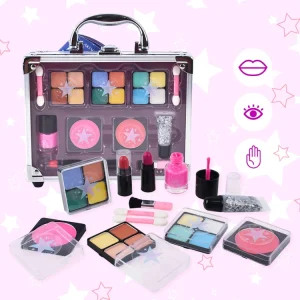
Once opened, play makeup for kids can collect microbes from skin, fingers, and shared brushes. Water-based creams and gels are especially vulnerable. Over time, this can lead to bacterial or fungal growth, which may cause irritation or rash.
Sharing increases the chance of contamination. A compact palette passed around a sleepover can pick up microbes from multiple users. Preservatives slow this process, but they do not stop it forever. Good hygiene and shelf-life awareness help limit these risks without changing the play experience.
Understanding Labels: What Parents Should Look For
Labels on play makeup for kids can look simple, but they contain key safety clues. Ingredient lists, age guidance, and compliance marks help explain how the item was tested and for what type of use.
Ingredient Transparency
An ingredient list shows what is in the product and in what order. This helps parents identify potential allergens and compare items. Transparent labeling is more common in products regulated as cosmetics than in generic toys.
For kids with sensitive skin, knowing if a product contains fragrances, certain dyes, or specific preservatives can make a practical difference. Pediatric dermatology clinics often ask parents to bring packaging for review when reactions occur, showing how ingredient lists support diagnosis and patch testing.
Certification and Compliance Indicators
Some markets require compliance marks to confirm a product meets specific rules. These may relate to cosmetic safety, toy standards, or import requirements depending on the region. They do not promise zero risk, but they do show that the item passed defined checks before sale.
Parents sometimes assume that every play makeup for kids receives the same screening, but certification systems differ widely. A glitter gel sold as a cosmetic may undergo irritation testing, while a similar toy product might only be checked for physical hazards or labeling accuracy.
Age Recommendations
Age markings help signal who the product is designed for. They consider behavior as much as formula. Younger children may mouth objects, rub eyes frequently, or share containers more often, leading to different exposure patterns.
An age label does not speak to the maturity of a child, but it reflects use data and safety modeling. For example, lip products aimed at very young kids require ingestion exposure to be considered during safety review. This is less central for products designed for older pretend play groups.
Shelf Life and Expiry Dates
Shelf life is the time a product remains stable and free from excess microbial growth under normal use. Some play makeup for kids shows a date or an open-jar symbol to guide use. Not all toy cosmetics include this, especially when they are dry powders or wax sticks.
Once opened and shared, the clock speeds up. Water-based gels can change in texture and smell over time. While this does not always signal a hazard, it hints that microbes may be multiplying. Keeping track of opening dates can lower the chance of irritation without altering the play routine.
Skin Health and Development in Children
Children’s skin is still developing and behaves differently from adult skin. The barrier that protects against irritants and microbes is thinner in early years and gains strength over time.
Differences Between Kids’ Skin and Adult Skin
Kids have a higher surface-area-to-body-weight ratio than adults, and their stratum corneum—the outer barrier layer—is thinner. This means substances placed on the skin may penetrate more easily. In adults, the barrier is thicker and less reactive, so mild irritants may go unnoticed.
These differences can change how kids respond to pigments, fragrances, or preservatives in play makeup for kids. While most reactions are mild and temporary, it explains why dermatologists often ask about new lotions, face paints, or toy cosmetics during consultations for facial rashes.
Why Sensitivity Matters for Makeup Safety
Sensitivity in children is not only about ingredients; it is about behavior. Kids rub their eyes, press their cheeks into hands, and lean on surfaces. These actions increase friction and transfer, which can worsen irritation from otherwise mild products.
Some children also have atopic tendencies, meaning they are more likely to have eczema or allergies. Research notes that pediatric atopic dermatitis affects up to 20% of children in developed countries (Nutten, JACI, 2015). For these kids, even small exposures to fragrances or dyes in play makeup for kids may lead to dryness or flares. Sensitivity does not make toy cosmetics unsafe by default, but it does change how the skin responds during play.
Are “Natural” or “Organic” Play Makeup Options Safer?
Some parents assume that natural or organic play makeup for kids is automatically safer. However, these words do not guarantee a product is free of irritants or tested for skin contact.
In fact, natural labels often focus on plant-based sources rather than exposure patterns or pediatric skin biology. So the safety question is not just about where the ingredients come from, but how they behave on a child’s skin during pretend play.
The Meaning and Misuse of “Natural” Labeling
The term “natural” is not defined the same way across markets. In some places it simply means the ingredient started as a plant or mineral. It does not certify purity or cosmetic safety. This can lead to confusion because many parents interpret the label as a sign of lower risk.
Some products marketed as natural play makeup for kids may still include common allergens or fragrances. Others may blend natural and synthetic components, which is normal for stability. Labels rarely explain these details, so the term can mask complexity rather than clarify it.
Allergen Risks in Botanical Ingredients
Botanical extracts can bring their own risks. Plants contain many active compounds, including fragrance molecules that can irritate sensitive skin. Tea tree, lavender, citrus, and mint oils are examples often discussed in dermatology due to contact allergy potential in certain individuals.
For kids prone to eczema or seasonal allergies, plant-heavy formulas in play makeup for kids may trigger redness or dryness. This does not mean botanicals are harmful by default; it simply shows that “natural” is not the same as “non-allergenic.” Pediatric contact dermatitis clinics frequently evaluate reactions related to botanical personal care products.
Regulatory Oversight Differences
Organic and natural labels may relate more to farming and sourcing than pediatric safety. Certification systems often track pesticide use or soil conditions, not how a substance behaves on lips or eyelids. Meanwhile, cosmetic testing rules look at exposure, irritation, and microbiology.
This split can surprise parents. A product may be labeled organic due to agricultural standards but still lack cosmetic testing for children. On the other hand, a non-organic play makeup for kids may comply with strict cosmetic regulations that address skin contact and accidental ingestion. So the safety comparison requires more than marketing terms.
Best Safety Practices for Parents When Kids Use Play Makeup
Even when play makeup for kids meets safety rules, the way children use it can change the exposure. Simple routines such as patch-testing, cleaning tools, and checking labels can lower the chance of irritation without changing the fun. These steps do not require medical expertise and mostly involve paying attention to behavior and hygiene during pretend beauty play.
Patch-Testing for Skin Sensitivity
Patch-testing is a small check done before full use. A tiny amount of the play makeup for kids is placed on the inner forearm or behind the ear. Parents then wait to see if redness or itching develops over the next day.
This approach is common in dermatology for new skincare products. For kids with eczema or seasonal allergies, a quick patch-test can reduce guesswork. It does not rule out every reaction, but it gives parents a simple first screen before makeup goes on the face or near the eyes.
Hygiene and Application Tools
Brushes, sponges, and even fingers can transfer microbes. Kids often share tools at parties or sleepovers, which increases the chance of contamination. Light cleaning of tools and containers helps reduce this risk, especially for gels and creams.
Dry powders tend to be less prone to microbial growth, but fingers can still carry bacteria from one surface to another. A small drawer or pouch for the child’s own play makeup for kids can also reduce sharing without changing the pretend play scenario.
Supervised vs. Independent Play
Supervision level matters. During the early years, kids may rub glitter into eyes or taste flavored glosses. Light supervision helps redirect these behaviors. As children get older, pretend play becomes more organized and less exploratory.
Not every session needs an adult sitting nearby. Sometimes just being in the same room is enough. The main idea is to notice early signs of irritation or risky behavior before it becomes a habit during play makeup use.
Teaching Kids Healthy Use Habits
Kids enjoy feeling “in charge” of their routines. This makes pretend beauty play a good time to introduce gentle safety rules. Easy messages like “don’t share brushes” or “keep color away from eyes” can stick faster than long lectures.
When kids understand the basics of safe play, they often repeat the rules to friends during group sessions. This peer reinforcement helps maintain habits even when adults are not watching. Over time, these small practices make play makeup for kids less likely to cause skin or eye discomfort.
Conclusion
In summary, play makeup for kids can be a safe and enjoyable part of pretend play if parents pay attention to ingredients, labeling, and proper hygiene. Awareness of skin sensitivity, age recommendations, and safe habits helps reduce irritation, allergic reactions, and microbial risks. Thoughtful supervision and simple safety checks make creative play both fun and low-risk.