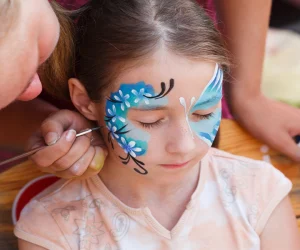
Face paint for football games is more than decoration. It plays a role in how young fans join the social environment of a stadium. Colors and stripes become signals of belonging. When applied to the face, these marks can feel bold, public, and energetic, much like the sport itself.
Face Paint as a Form of Team Spirit and Identity
Children often use football face paint to match the colors of their school or hometown team. These patterns act as simple visual markers, much like jerseys and foam fingers, but closer to the skin. They help kids show support without speaking.
In many stadiums, clusters of painted faces form small groups inside the crowd. Psychologists call this “visual identity grouping,” where shared colors help people form fast, temporary connections during events (APA, 2019). Kids notice this and tend to join in.

Why Kids Love Wearing Bright Colors at Sports Events
Children are drawn to high-contrast and bright visuals. Stadiums are already full of noise, flags, and motion, so face paint for football games fits easily into that sensory world. It makes the child feel part of the action rather than only watching it.
Some kids also enjoy the ritual of getting painted before the game. One parent might paint quick stripes on the cheeks in the parking lot before kickoff. The small routine becomes part of the game day memory, even if the details of the score fade later.
What Kind of Face Paint Is Best for Football Games? Key Qualities to Look For
The best face paint for football games does not start with color; it starts with how it sits on the skin. Stadium days can be long, loud, and full of movement. Kids cheer, snack, sweat, and sometimes cry when their team loses. A suitable formula needs to tolerate all of that without stressing the skin.
Skin-Friendly Formulas for Kids and Teens
Children’s skin has a thinner outer barrier compared to adults. Dermatology studies note that pediatric skin loses water faster and may absorb ingredients more easily (Pediatrics, 2020). For this reason, gentle and skin-friendly formulas are preferred for football events.
Face paint for football games should be free of heavy oils or strong solvents. Mild, water-dispersible pigments tend to rinse off more cleanly. They also give parents fewer worries when it is time to remove the colors after the final whistle.
Avoiding Harsh Scents and Irritants
Fragrance, drying alcohols, and strong preservatives can irritate the skin, especially near the eyes and cheeks. During a football game, sunlight, wind, and sweat can increase sensitivity. Many families have learned this only after a child rubbed his face during halftime and felt a stinging sensation.
Choosing low-scent and low-irritant face paint reduces the chances of redness or itching mid-game. It also keeps kids from constantly touching their face, which helps the colors stay in place longer.
Breathable and Flexible Color Layers
When face paint for football games dries stiff on the skin, children tend to pick at it. Flexible layers move with the skin during smiling, shouting, and snack breaks. This reduces flaking and helps the colors look even through the game.
Breathability matters as well. A layer that seals the skin can trap heat and sweat droplets. As the stadium grows louder and the game intensifies, trapped moisture can break down the paint or make the skin feel warm and itchy.
Why Comfort Matters During Cheering and Movement
A child who is uncomfortable will not care about matching team colors. Cheering, jumping, and waving signs are all dynamic activities. If the face paint cracks or pulls during motion, the child may ask to wipe it off before halftime.
Comfort also affects social participation. When the paint feels light and flexible, kids keep it on longer and stay more engaged with the event. In this way, comfort becomes part of performance—just like wearing the right shoes for running on the field.
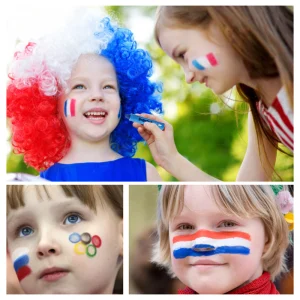
Comparing Different Types of Face Paint for Football Games
Face paint for football games comes in several textures, each with different behaviors on the skin. Weather, activity level, and time spent at the stadium all affect how these paints perform. Knowing the basic differences helps families choose formulas that feel comfortable for the whole event rather than just the first quarter.
Water-Based Face Paints for Quick Application
Water-based face paint for football games is often used for simple stripes or mascot symbols. It spreads smoothly with a small amount of water and dries with a soft finish. Parents appreciate it because it removes easily with mild cleansers and does not linger on the skin after the game.
However, water-based color can lift when exposed to sweat or light rain. On warm days, a child who cheers loudly and wipes his forehead may notice the colors fade faster. For short games or indoor events, this texture can be a practical and kid-friendly option.
Grease-Based Face Paints for Bold Color and Long Wear
Grease-based paints have a denser texture that holds pigments well. These paints are often chosen for strong team colors or designs that need more coverage. They stay flexible on the skin and do not dissolve as quickly when exposed to sweat, which makes them suitable for full-length football events.
The trade-off is that removal can take longer. Parents may need patience and multiple cleansing steps to break down the layer fully. While this texture is durable outdoors, it may feel heavier on the skin compared to water-based formulas, especially for younger children.
Hybrid Face Paint Textures for Outdoor Sports Settings
Hybrid textures sit between water-based and grease-based paints. They aim for a balance: easier removal than grease-based formulas but more staying power than water-based ones. For football stadiums with shifting weather, this middle path can provide predictable wear without feeling thick.
Hybrids also tend to resist cracking, which matters when kids shout, laugh, and stretch their faces often during the game. Stadium environments include sun, wind, and steady motion, so flexible textures help kids stay focused on the field instead of on their skin.
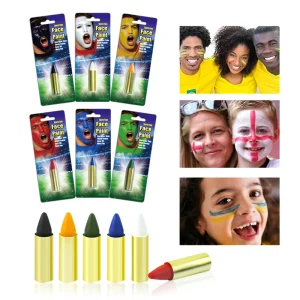
Weather Conditions and Face Paint Performance
Football stadiums are outdoor spaces with changing conditions. Heat, cold, wind, and humidity can all influence how face paint for football games behaves on the skin. Children move a lot during sports events, so the paint must deal with environmental stress as well as constant facial motion.
Face Paint for Hot and Humid Game Days
Warm and humid weather makes the skin produce more sweat. Water-based face paint may fade or streak when mixed with moisture. Grease-based and hybrid textures tend to resist breakdown longer, although they can feel heavier on the skin as the temperature rises.
On very hot days, kids often touch their faces to wipe sweat. This can smudge paint and transfer pigment onto clothing or stadium seats. Parents notice this most during early-season football games or during mid-afternoon kickoffs when the sun sits high.
Sweat Resistance and Staying Power
Sweat adds both salt and moisture to the skin surface, which can soften face paint. Durable layers stay flexible even as moisture collects. Paint that dries stiff is more likely to chip or rub off during loud cheering or physical play in the stands.
Staying power also affects comfort. If the paint breaks down too soon, children may feel sticky or grimy. A texture that holds long enough to finish the game helps avoid mid-event cleanup breaks and keeps focus on the field.
Face Paint for Cold or Windy Weather
Cool air slows sweat production, so face paint for football games may last longer in fall or winter. However, wind and low humidity can dry the skin faster. When the skin becomes dry, the surface texture changes, and some paints settle into small lines or dry patches.
Younger children often lick their lips in cold weather, and this can affect paint near the mouth area. Parents may need to reapply small patches during halftime if the design is complex or close to the lips.
Preventing Flaking or Cracking
Face paint dries out when exposed to wind and cool air for long periods. Cracking can appear when the child smiles or shouts during the game. Flexible textures that move with the skin help reduce this issue.
Breathable layers also prevent the sensation of tightness, which some kids dislike in cold weather. When the paint feels natural on the face, children tend to keep it on longer and avoid picking at it during the final quarter.
Football Game Safety Considerations for Children’s Face Paint
Safety is central when choosing face paint for football games, especially for children. Stadiums create unique conditions: sun exposure, wind, sweat, long sitting periods, and crowded stands. These factors can influence how skin responds to pigments and textures during the event.
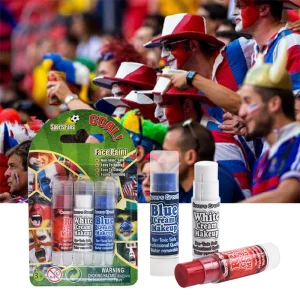
Patch Testing for Sensitive Skin
Some children have skin that reacts quickly to new products. A simple patch test on the inner arm or behind the ear can show how the skin might respond before covering the cheeks or forehead with bright team colors. Low-level redness or itching may appear within a few hours if the child is sensitive.
Patch testing helps parents avoid mid-game discomfort. If irritation appears at home, the paint can be removed calmly rather than in a busy stadium bathroom. Dermatology guidelines often note patch testing as a basic form of exposure assessment for children with reactive skin (AAD, 2021).
Avoiding Eye and Lip Irritation at Sports Events
The eye and lip areas are more delicate than the rest of the face. Face paint for football games should be applied with care around these regions, as pigments may migrate when the child sweats, rubs their eyes, or drinks from a water bottle. Strong movement patterns during cheering can also shift paint toward the lash line.
Windy football games increase tear production, and moisture can carry pigments into the eye. Mild stinging may occur if the formula is not suitable for that region. Keeping paint slightly away from the waterline and lip edge reduces this risk and still allows bold team colors.
Application Techniques for Football-Themed Face Paint
Applying face paint for football games is both a creative activity and a practical one. Stadium energy, weather, and long seating periods shape how designs should be placed on the skin. Good placement can keep colors visible while staying out of the way during cheering, eating snacks, and drinking water.
Stripes, Cheeks, and Mascot Patterns
Cheek stripes are the simplest and most common design at football games. They require little surface area and dry quickly. Because the cheeks move often when kids smile or shout, flexible paint textures help prevent cracking in these regions.
Mascot shapes or logos can cover more surface. These designs often sit on the upper cheek or temple because those areas stay relatively flat while the child moves. They also remain visible when the child wears a hat or leans forward to watch the field.
Kids sometimes request multi-color patterns that match jerseys or school banners. Layering bright shades works better when the first layer dries completely before adding the second. This prevents smudging and keeps lines cleaner throughout the game.
Face Paint Placement for Better Comfort During Cheering
Placement affects comfort more than many families expect. Face paint near the nostrils may wear off quickly as the child breathes heavily or wipes their nose. Paint on the forehead can mix with sweat on warm days, so thinner layers may feel better in that area.
For high-energy cheering, the cheek and temple areas tend to stay most stable. These spots also avoid contact from helmet straps or winter scarves, depending on the season. Kids who snack often during the game benefit from keeping paint away from the lips to reduce accidental transfer onto cups or food items.
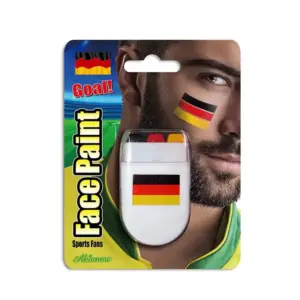
Stadiums are crowded spaces, so parents sometimes apply paint in the parking lot before kickoff. This allows enough drying time and reduces the risk of accidentally bumping the design while moving through tight rows toward seating.
Removal Considerations After Football Games
Cleanup is an important part of the face paint experience, especially after a long football game with snacks, sweat, and outdoor air exposure. Gentle removal methods help keep skin calm, particularly for kids with sensitivities. Parents also appreciate techniques that don’t require intense scrubbing at the end of an already tiring day.
How to Remove Face Paint Without Scrubbing
Most water-based face paints come off easily with warm water and a soft washcloth. Using a mild foaming cleanser can help lift pigment without friction. If there are bolder colors or layered designs, applying a small amount of baby oil, micellar water, or a kid-friendly makeup remover can loosen the pigment so it wipes away cleanly.
Avoid using alcohol-based removers or rough exfoliating pads on children’s skin, as these can trigger redness. For paints that have been exposed to sweat or sunscreen, removal may take two gentle passes rather than one, but it should never feel scratchy or uncomfortable for the child.
Post-Game Skin Care for Kids
After the paint is removed, rinsing the skin thoroughly helps remove any residue from cleansers or oils. Applying a lightweight, fragrance-free moisturizer supports the skin’s barrier function, especially during colder football months when outdoor air can be drying.
If a child has sensitive skin or has worn face paint for many hours, parents may notice mild redness around high-motion areas like the cheeks or nose. This usually fades quickly on its own. Avoid layering new makeup or thick creams immediately afterward; keeping the skin clean and simple for the rest of the evening allows it to settle.
Cultural and Social Meaning of Face Paint in Football
Face paint for football games is more than decoration. It signals loyalty, belonging, and shared excitement. Colors and patterns help fans identify each other across the stadium, building a sense of unity even among strangers. Kids often join in because the ritual feels playful and symbolic, not just cosmetic.
Color Symbolism and Mascot Identity
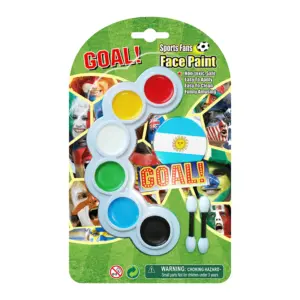
Certain colors carry strong meaning in football culture. Many fans use face paint to match jerseys, helmets, or mascot themes, turning a simple pigment into a shared language. A bold stripe or cheek patch can signal rivalry or pride without saying a word.
A college mascot’s shades of blue or gold can even shape how fans interact. Researchers in sports psychology note that color matching in crowds increases social cohesion and reduces anxiety during high-energy events (Wann & Branscombe, 1993). For kids, it feels like joining a team, even from the stands.
The Role of Face Paint in Community and Fan Culture
Face paint acts as a visual marker during tailgates, parades, and pre-game rituals. Families often paint together before leaving for the stadium, creating small traditions that connect generations. Local clubs sometimes offer free paint stations at youth games, turning it into part of the fan experience.
Because the colors are bold and visible, kids and teens can spot fellow supporters quickly. That shared identity encourages chanting, cheering, and dance routines without emotional hesitation. The face paint becomes a low-tech tool for group bonding.
Environment and Skin Health Factors
Outdoor football often involves long periods in shifting weather, sun exposure, and crowd movement. These conditions affect how face paint behaves and how the skin underneath reacts. For children, the skin barrier is still developing, so environmental factors deserve basic attention rather than worry or alarm.
UV Exposure and Outdoor Stadium Settings
Many football games take place in open stadiums where sunlight reflects off metal seats and artificial turf. In bright conditions, pigments may heat up slightly or feel tacky, especially around the cheeks or forehead. Applying a kid-safe sunscreen first can help, as long as it is fully absorbed before painting.
Some pigments behave differently under UV light. Fluorescent or neon shades can appear more intense, which kids enjoy. However, experts recommend checking that paints are labeled “cosmetic-grade” and tested for photostability, meaning they remain safe and stable in sunlight (FDA, 2023).

Sweat, Dust, and Skin Barrier Considerations
Football games often involve dust from concessions, turf, or windy bleachers. When mixed with sweat, these particles can collect along the edges of face paint. During long events, parents may gently blot rather than wipe to avoid smearing or irritating the skin.
Children have thinner epidermal layers than adults, which makes their skin barrier more responsive to friction and dryness. Using breathable formulas and avoiding thick layers helps reduce congestion as sweat evaporates. After the game, rinsing the face with lukewarm water is usually enough to reset the skin without stripping it.
Conclusion
Choosing the right face paint for football games balances safety, comfort, and visual impact. Kid-friendly, breathable formulas with flexible pigments allow colors to last through cheering, movement, and weather.
Proper application, placement, and post-game care protect sensitive skin while keeping the experience fun. Thoughtful preparation ensures every child can show team spirit safely and enjoyably.