Private label kids makeup refers to cosmetic products made for children but sold under a specific brand name. The focus is not only on play, but also on safety, simple formulas, and clear standards.
Definition and Core Concept of Private Label Kids Makeup
Private label kids makeup means a product is made by one manufacturer but labeled and sold by another company. The formula, packaging, and design can be adjusted to fit certain safety rules or age needs. This model is common in many consumer goods.
These products are usually designed for children’s skin. So, the formulas tend to be mild, easy to wash off, and lower in strong pigments. According to the U.S. FDA, cosmetics must be safe for use under labeled conditions, even if they are for play (FDA, 2023).
In practice, private label allows more control over ingredients and testing. For example, a company may request fewer fragrance agents or avoid certain dyes. This helps create products that better match safety goals for young users.
How It Differs from Regular Kids Makeup Products
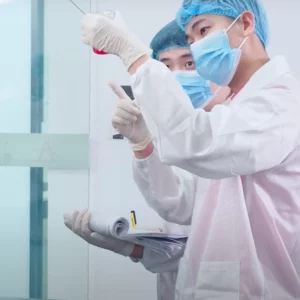
At first glance, private label kids makeup may look the same as regular kids makeup. However, the key difference lies in how the product is developed and controlled. Private label products often follow a more defined process set by the brand owner.
Regular kids makeup is usually mass-produced with fixed formulas. In contrast, private label products may adjust ingredients, texture, or color levels. This can affect how the product behaves on skin, such as how easily it spreads or washes off.
Another difference is in testing and documentation. Private label products often require clear records, such as ingredient lists and safety checks. In the EU, Regulation (EC) No 1223/2009 requires a Product Information File for cosmetics, which supports traceability and safety review.
Why Private Label Kids Makeup Is Gaining Popularity
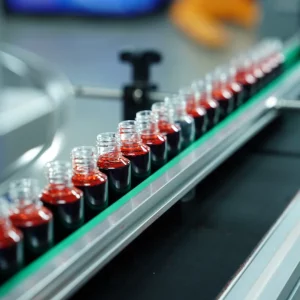
There are several reasons for the rise of private label kids makeup. First, there is growing awareness of ingredient safety. Parents now pay closer attention to labels and product claims, even for play items.
At the same time, regulations are becoming stricter. This pushes companies to use clearer formulas and better testing methods. Private label systems make it easier to adjust products to meet these rules across different regions.
Finally, there is a shift in how children use makeup. It is often part of guided play, not daily use. Because of this, products need to balance safety, ease of removal, and simple design. Private label models support this balance in a more controlled way.
Why Kids Are Drawn to Makeup Play
Children are naturally curious about adult tools and daily routines. Makeup is one of them. It combines color, touch, and change, which makes it easy to explore.
The Role of Imaginative Play in Child Development
Imaginative play helps children build thinking and social skills. When kids pretend, they test ideas and actions in a safe way. Makeup play often becomes part of this process, like pretending to be a performer or a caregiver.
Research shows that pretend play supports language and problem-solving. For example, the American Academy of Pediatrics notes that play helps children develop cognitive flexibility and self-control (AAP, 2018). Makeup tools can act as simple props in this learning.
In this setting, the product itself is less important than the action. A brush or color becomes a symbol. This symbolic use is a key step in early development and helps children understand the world around them.
Makeup as a Tool for Creativity and Self-Expression
Makeup gives children a direct way to explore color and form. Unlike drawing on paper, it involves the body, which adds a sensory layer. Kids can see quick results, which keeps them engaged.
At a basic level, this activity supports fine motor skills. Holding small tools and applying color requires control and coordination. Over time, these actions can improve hand movement and precision.
Makeup play also allows simple choices. A child may pick a color or decide where to place it. These small decisions support early self-expression. It is not about beauty, but about trying ideas and seeing what happens.
Social Influence and Role-Playing Behaviors
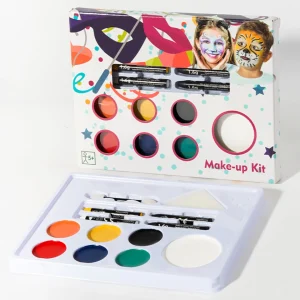
Children often copy what they see. This includes parents, siblings, or media figures. Makeup becomes part of role-play, where a child acts out a familiar scene, like getting ready for an event.
Social learning theory explains this pattern. Children observe behavior and repeat it in play. According to Bandura’s work, imitation is a key way children learn social roles (Bandura, 1977). Makeup can fit into this process as a visible routine.
Group play also plays a role. When children use makeup together, they may assign roles or share tools. This supports turn-taking and basic cooperation. In this way, makeup play becomes a small social system, not just an individual activity.
Key Safety Considerations in Private Label Kids Makeup
Safety is the core issue in kids makeup. Children’s skin is still developing, so it reacts faster to outside substances. Because of this, products must be simple, stable, and well tested. A careful review of skin needs, ingredients, and testing helps reduce risk.
Understanding Children’s Sensitive Skin Needs
Children’s skin is thinner than adult skin. It also has a weaker barrier, which means it can lose moisture faster and absorb substances more easily. This makes it more likely to react to irritants.
In practice, mild formulas are preferred. Products should avoid strong solvents or heavy pigments. The goal is to reduce friction, dryness, and buildup on the skin surface.
pH balance is also important. Skin-friendly products usually stay close to neutral pH. This helps protect the natural barrier and lowers the chance of redness or itching during use.
Common Ingredients to Avoid in Kids Makeup
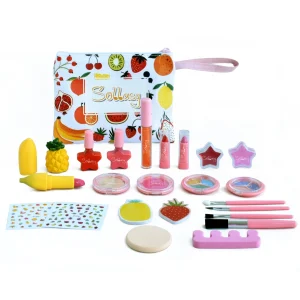
Not all cosmetic ingredients are suitable for children. Some may cause irritation, while others raise concerns with long-term use. Clear ingredient review is a key step in product safety.
Regulatory bodies such as the FDA and the European Commission provide guidance on restricted substances. However, even allowed ingredients must be used at safe levels and in the right context.
Potential Allergens
Some ingredients can trigger allergic reactions, even in small amounts. Common examples include certain fragrances, preservatives, and colorants. These may cause redness, itching, or mild swelling.
Fragrance is a frequent source of concern. Even “natural” scents can contain allergenic compounds. For this reason, fragrance-free or low-fragrance options are often preferred for children.
Patch testing is a useful step. Applying a small amount to a limited area can help detect early reactions before full use.
Harsh Chemicals and Synthetic Additives
Certain chemicals are not suitable for children’s products. For example, strong solvents or high levels of alcohol can dry the skin. This may lead to irritation over time.
Some synthetic dyes and additives may also cause sensitivity. While many are approved for cosmetic use, their concentration and exposure time still matter. Children may be more sensitive to these factors.
In safe formulations, these substances are either limited or avoided. The focus stays on stability, easy removal, and low skin impact.
Importance of Dermatological Testing and Safety Certifications
Testing helps confirm that a product is safe under normal use. Dermatological testing often includes irritation tests on human skin under controlled conditions. These tests check for redness, dryness, or other reactions.
In many regions, safety assessment is required before a product enters the market. For example, EU regulations require a formal safety report for each cosmetic product (EC No 1223/2009).
Certifications can also support transparency. While they do not replace proper testing, they provide an extra layer of review and help standardize safety checks across products.
Age-Appropriate Formulations and Usage Guidelines
Children at different ages have different needs. A product suitable for a teenager may not be safe for a younger child. This is why age guidance is important on labels and instructions.
Formulations for younger children are usually simpler. They may use fewer pigments and softer textures. This reduces both skin stress and the risk of misuse.
Usage guidelines also matter. Adults should guide application and removal, especially for younger users. Short use time and proper cleaning can help lower the chance of irritation or buildup.
Ingredient Transparency in Private Label Kids Makeup
ngredient transparency is a key part of cosmetic safety and trust. In private label kids makeup, the formula is often shared through detailed documentation and labels. Clear information helps users and caregivers understand what is in the product and how it may interact with skin.
Why Ingredient Disclosure Matters
Ingredient disclosure allows users to see exactly what is inside a product. This is important for identifying possible allergens or substances that may not suit certain skin types. Without this information, it is difficult to assess safety or compatibility.
Regulations in many regions require full ingredient listing. For example, cosmetic labeling standards in the EU and U.S. require that ingredients be listed in a standardized format (INCI names). This supports consistency and makes products easier to compare.
In practice, transparency also helps with traceability. If a reaction occurs, ingredient records allow quick identification of potential causes. This supports both users and manufacturers in reviewing and improving product safety.
Natural vs. Synthetic Ingredients: What Parents Should Know
The terms “natural” and “synthetic” describe the source of ingredients, not their safety by default. Natural ingredients come from plant, mineral, or animal sources, while synthetic ones are created through chemical processes.
Both types can be used safely in cosmetics when properly tested and controlled. For example, some natural extracts may still cause irritation, while some synthetic compounds are designed for stability and consistency.
In private label kids makeup, the choice between natural and synthetic is usually based on performance, stability, and safety limits. It is more useful to look at the full ingredient list rather than rely only on labels that describe origin.
Preservatives, Fragrances, and Colorants Explained
Preservatives are used to prevent microbial growth, especially in products that contain water. Without them, bacteria or mold could develop over time. Common preservatives are regulated and used within safe limits defined by authorities.
Fragrances are added to give a scent, but they are not required for function. They can be made from natural or synthetic sources. Because fragrance mixtures can include multiple compounds, they are often a common source of sensitivity.
Colorants give makeup its visual appearance. In kids makeup, approved colorants are selected based on safety and usage limits. Regulatory lists, such as those from the FDA or EU, define which colorants are allowed and at what concentrations.
Reading and Interpreting Labels Effectively
Reading a label starts with the ingredient list, usually written in INCI format. Ingredients are typically listed in order of concentration, from highest to lowest, though small components under a certain threshold may appear at the end.
It is useful to scan for known allergens or ingredients of concern. If a child has sensitive skin, caregivers may look for shorter ingredient lists or products labeled as fragrance-free. However, label claims should always be checked against the actual ingredient list.
Other label elements include batch numbers, expiration dates, and usage instructions. These details help ensure proper use and storage. Over time, understanding these elements makes it easier to evaluate products in a more structured and informed way.
Types of Private Label Kids Makeup Products
Private label kids makeup comes in different product forms, each designed for specific areas of use. These types vary in texture, composition, and application method.
Lip Products (Balms, Glosses, Tints)
Lip products for kids are usually designed with simple, mild formulas. Lip balms often contain waxes and oils that form a light layer on the lips. This helps maintain moisture without strong active ingredients.
Glosses and tints are typically water-based or lightly pigmented. They are made to be easy to apply and remove. In many cases, color intensity is kept low to reduce staining and simplify cleanup.
Because lips are sensitive, these products are generally tested for safety and comfort during short-term use. Ingredients are selected to avoid harsh irritants, and flavors or scents, if present, are kept mild.
Face Products (Blush, Powder, Face Paint)
Face products include items like blush, pressed powders, and face paints. These are applied to larger surface areas of the skin, so their formulation must balance spreadability and removability.
Blush and powders are often made with fine particles that sit on the skin rather than absorb into it. Face paints may use water-based systems that allow easy washing with soap and water. This is important for temporary use.
In many formulations, binders and pigments are used in controlled amounts to maintain texture and color consistency. The goal is to allow smooth application while minimizing residue after removal.
Eye Products (Eyeshadow, Mascara Alternatives)
Eye products for children are designed with caution due to the sensitivity of the eye area. Eyeshadows are usually low in loose particles and may come in pressed or cream forms to reduce dusting.
Mascara alternatives for kids are often non-fiber, water-based products that avoid strong adhesion to lashes. Some are designed to be easily removable without special cleansers.
Since the eye area is delicate, these products are often formulated to reduce the risk of migration into the eyes. Packaging and applicators are also designed to support controlled use and limit excess product.
Nail Products (Peel-Off Nail Polish, Water-Based Formulas)
Nail products for kids differ from traditional nail cosmetics in how they are removed. Peel-off nail polish is designed to form a film that can be removed without solvents. This avoids the need for strong removers.
Water-based nail formulas rely on water as the main solvent. These products typically dry through evaporation and can be cleaned with soap and water or gentle peeling, depending on the formulation.
Pigments and polymers are selected to create a temporary coating. The emphasis is on short wear time, easy removal, and minimal exposure to harsh chemicals commonly found in adult nail products.
Play Makeup Kits and Sets
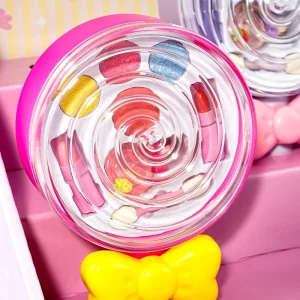
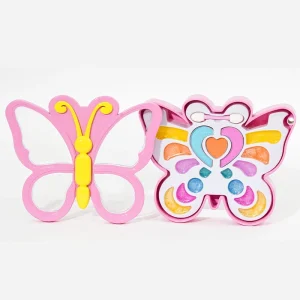
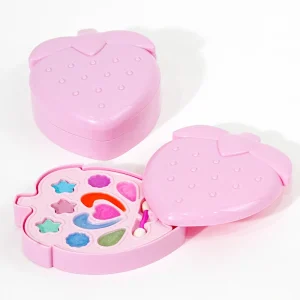
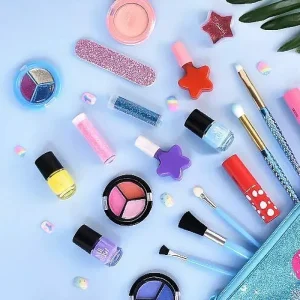
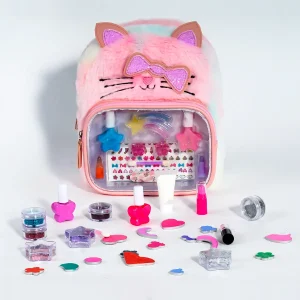
Play makeup kits combine multiple product types into a single package. These sets may include lip, face, eye, and nail items arranged for coordinated use. The components are usually sized for ease of handling.
The structure of a kit often includes separate compartments or holders to keep items organized. This helps prevent mixing and supports cleaner storage after use. Tools such as brushes or applicators may also be included.
From a product design perspective, kits are assembled to group compatible items together. Each component still follows its own formulation requirements, but the set as a whole is designed for simple use and clear separation of functions.
Packaging and Design Considerations for Kids Makeup
Packaging in private label kids makeup is not only about appearance. It also plays a role in safety, hygiene, and ease of use. Design choices affect how children handle the product, how it is stored, and how it is protected from contamination. A structured approach to packaging helps support both function and basic safety requirements.
Child-Friendly Packaging Features
Child-friendly packaging focuses on simple operation and clear structure. Containers are often designed with easy-open lids, soft edges, and grips that fit smaller hands. This reduces the effort needed to access the product during use.
At the same time, closures should not open too easily. A balance is needed between accessibility and secure sealing. For example, snap caps or twist lids are commonly used to limit accidental spills. Clear labeling and simple icons also help children and caregivers understand how to use the product correctly.
Hygiene and Contamination Prevention
Hygiene is an important factor in cosmetic packaging, especially for products that may be shared or used multiple times. Packaging should limit direct contact between the product and external surfaces. This helps reduce the risk of contamination.
Common approaches include single-use applicators, sealed compartments, or containers that allow controlled dispensing. Wide-open containers without protection may expose the product to air and contact, which can introduce bacteria or debris.
Proper closure after each use is also essential. Packaging that maintains a tight seal helps preserve the product’s condition and reduces exposure to environmental factors such as dust or moisture.
Durable and Non-Toxic Materials
Materials used in packaging must be both durable and safe for handling. Plastics used in children’s products are typically selected for their resistance to breakage and low risk of sharp edges. This reduces the chance of injury during normal use.
Non-toxic materials are also important. Packaging components should not release harmful substances under normal conditions. Regulatory standards in many regions require that packaging materials meet specific safety criteria for consumer goods, including cosmetics.
Durability also includes resistance to pressure, drops, and repeated opening. A stable container helps maintain the integrity of the product inside and supports consistent use over time.
Visual Appeal and Educational Value
The visual design of packaging often uses simple shapes, clear color contrast, and recognizable symbols. These elements help children identify products and distinguish between different items in a set.
Beyond appearance, packaging can also have an educational role. Labels may include basic instructions, usage steps, or warnings in a format that is easy to understand. Visual cues, such as icons, can support early reading skills and help guide correct usage.
In structured designs, packaging may also organize products into categories or steps. This can introduce a simple sequence of actions, which helps children follow a routine and understand the order of use without relying on complex text.
Regulatory Standards for Private Label Kids Makeup
Private label kids makeup must follow strict regulatory standards to ensure it is safe for intended use. These standards vary by region but share a common goal: to control ingredients, verify product safety, and ensure proper labeling.
Overview of Global Safety Regulations
Cosmetic regulations are set by government authorities in different regions. While details vary, most systems require that products be safe under normal and reasonably foreseeable use. This includes control over ingredients, manufacturing processes, and final product evaluation.
In general, manufacturers must ensure that each product meets local legal requirements before it is sold. This often includes ingredient restrictions, documentation, and safety assessments. Private label products follow the same rules as other cosmetics, regardless of branding.
United States (FDA Guidelines)
In the United States, cosmetics are regulated by the Food and Drug Administration (FDA) under the Federal Food, Drug, and Cosmetic Act. The FDA does not approve cosmetics before they are marketed, but it does require that products be safe for use.
Manufacturers are responsible for ensuring safety and proper labeling. Ingredients must comply with FDA regulations, and color additives must be approved for their intended use. Labeling must also include ingredient lists, warnings if needed, and accurate product identity.
The FDA may take action if a product is found to be unsafe or misbranded. This creates a post-market system where responsibility lies primarily with the manufacturer or distributor.
European Union (Cosmetics Regulation)
In the European Union, cosmetics are regulated under Regulation (EC) No 1223/2009. This framework requires a more structured pre-market process compared to the U.S. system.
Before a product is sold, it must undergo a safety assessment conducted by a qualified safety assessor. A Product Information File (PIF) must also be maintained. This file includes details such as formulation, manufacturing method, and safety data.
Additionally, products must be notified through the Cosmetic Products Notification Portal (CPNP). This ensures that authorities have access to product information in case of safety concerns.
Labeling Requirements for Kids Makeup Products
Labeling is a key part of regulatory compliance. Most regions require that cosmetics include a list of ingredients using standardized names, often INCI (International Nomenclature of Cosmetic Ingredients).
Labels must also include net content, batch or lot numbers, and the name and address of the responsible party. If there are specific usage conditions or warnings, these must be clearly stated on the packaging.
For kids makeup, clear instructions are especially important. Labels may include guidance on age use, application methods, and precautions. This helps ensure that the product is used as intended and reduces the risk of misuse.
Safety Testing and Compliance Procedures
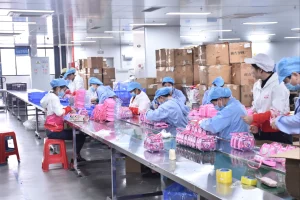
Before a private label kids makeup product is released, it typically undergoes a series of safety evaluations. These may include ingredient-level reviews, stability testing, and compatibility assessments. The goal is to confirm that the product performs as expected under normal conditions.
Dermatological testing is often part of this process. It checks whether the product causes irritation or adverse reactions on human skin under controlled conditions. In some cases, microbial testing is also conducted to ensure the product is free from harmful contamination.
Documentation is an important part of compliance. Records such as safety reports, test results, and formulation details must be maintained. These documents support regulatory review and provide traceability if questions arise about the product later.
Hygiene and Safe Usage Practices for Children
Hygiene is a key part of using kids makeup in a safe way. Because products may be reused and shared, proper habits help reduce the chance of contamination. Simple routines around application, cleaning, storage, and awareness of product limits can support safer use over time.
Teaching Kids Proper Application Techniques
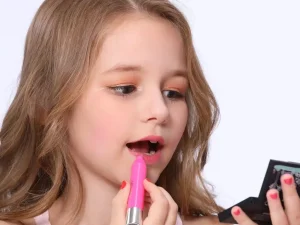
Children should learn to apply makeup with clean hands and tools. Before starting, hands should be washed with soap and water. This helps remove dirt and reduces the transfer of microbes to the product or skin.
Application should be done in small amounts. Using too much product can increase waste and may lead to uneven results. Adults can guide children on how to use brushes, sponges, or applicators in a controlled way, especially for areas near the eyes and lips.
Cleaning Tools and Surfaces
Makeup tools such as brushes and sponges should be cleaned regularly. Residue can build up on these tools and become a source of contamination. Cleaning with mild soap and water is usually sufficient for most non-porous tools.
Surfaces where makeup is applied or stored should also be kept clean. Wiping tables or trays before and after use helps maintain a hygienic environment. Allowing tools to dry fully before storage is also important, as moisture can support microbial growth.
Shelf Life and Expiration Awareness
Every cosmetic product has a limited shelf life. Over time, ingredients can degrade, and the product may change in texture, smell, or performance. Expiration dates or period-after-opening (PAO) symbols are often used to indicate safe usage time.
For kids makeup, it is especially important to follow these indicators. Products that have changed in color, odor, or texture should not be used. Keeping track of when a product is first opened can help monitor its usable period more accurately.
Avoiding Cross-Contamination
Cross-contamination can occur when tools or products come into contact with multiple users or surfaces without cleaning. This can transfer microbes or residues between users or items.
To reduce this risk, it is better to avoid sharing applicators directly between children. If sharing is necessary, tools should be cleaned between uses. Products should also be closed properly after each use to limit exposure to air and external particles.
How to Evaluate the Quality of Private Label Kids Makeup
Evaluating product quality involves observing how a product behaves in real use conditions. This includes its texture, stability, sensory properties, and documented testing results. A careful review of these aspects helps determine whether the product is consistent and suitable for its intended purpose.
Texture, Performance, and Ease of Removal
Texture refers to how the product feels during application. It should be smooth and easy to spread without clumping or separating. Consistent texture across batches is often a sign of controlled formulation and manufacturing.
Performance includes how the product applies, adheres, and wears on the skin. For kids makeup, performance also includes how easily it can be removed. Products designed for children are typically formulated to come off with mild soap and water or simple cleaning methods.
Ease of removal is important because it reduces the need for strong cleansers. A product that leaves minimal residue after washing is generally easier to manage in daily use.
Stability and Product Consistency
Stability refers to how a product maintains its properties over time under different conditions, such as temperature or storage. A stable product should not separate, change color significantly, or develop unusual odors during its shelf life.
Consistency across batches is also important. This means that each production run should have similar texture, color, and performance. Stability testing is often used during development to check how a product behaves under accelerated conditions, such as heat or humidity.
These tests help predict how the product will perform during normal storage and use. They also support quality control during manufacturing.
Sensory Experience (Smell, Feel, Appearance)
Sensory factors include how the product smells, feels, and looks during use. These elements do not define safety by themselves, but they can indicate formulation quality and user suitability.
A mild or neutral smell is often preferred for children’s products. Strong or unusual odors may signal the presence of added fragrances or changes in the formula. The feel of the product should be comfortable on the skin, without stickiness or excessive dryness.
Appearance includes color uniformity and visual clarity. Any separation, discoloration, or visible particles may suggest instability or improper storage conditions. Observing these signs helps identify whether a product is still in good condition.
Feedback from Dermatological Testing
Dermatological testing provides structured data on how a product interacts with skin. These tests are usually conducted under controlled conditions and may involve human volunteers or laboratory methods designed to assess irritation potential.
The results are documented in safety reports and used as part of the overall evaluation process. While such testing does not guarantee that no one will react, it helps estimate the likelihood of common skin responses.
When reviewing product quality, the presence of dermatological testing data indicates that the product has undergone a standardized review process. This adds another layer of information beyond visual inspection and user experience.
Conclusion
Private label kids makeup sits at the intersection of product design, safety standards, and user behavior. From ingredients and packaging to testing and labeling, each element plays a defined role in how the product performs and is used.