Kids nail polish may look like a tiny, playful version of adult polish, but it’s engineered very differently. Its chemistry is lighter, designed to be safe for sensitive nails and skin. Yet, this difference often affects how well it sticks and how long it lasts.
What Makes Kids Nail Polish Different from Adult Nail Polish
Kids nail polish is made to be non-toxic and free from harsh chemicals like formaldehyde, toluene, or DBP (U.S. Consumer Product Safety Commission, 2020). Unlike adult polish, it avoids strong solvents that help polish bond tightly to nails. This makes it safer but also less durable.
For example, imagine a seven-year-old painting her nails before a birthday party. The polish dries quickly and looks bright. But after a day of playing with blocks or washing hands, it starts to chip. That’s because the chemical mix in kids nail polish is thinner and softer. It prioritizes safety over strong adhesion.
Types of Kids Nail Polish and Their Ingredients
There are several types of kids nail polish. Peel-off polish contains plasticizers that let it come off in sheets. Water-based polish uses water as the main solvent, making it easy to clean but prone to smudging.
Each type includes pigments, mild resins, and film-formers to create color. Some even add glycerin or cellulose to keep the polish flexible. These ingredients reduce toxicity but also make the polish less sticky on the natural nail surface. As a result, peeling is common, especially when nails are young, thin, or moist.
The Science of Nail Polish Adherence
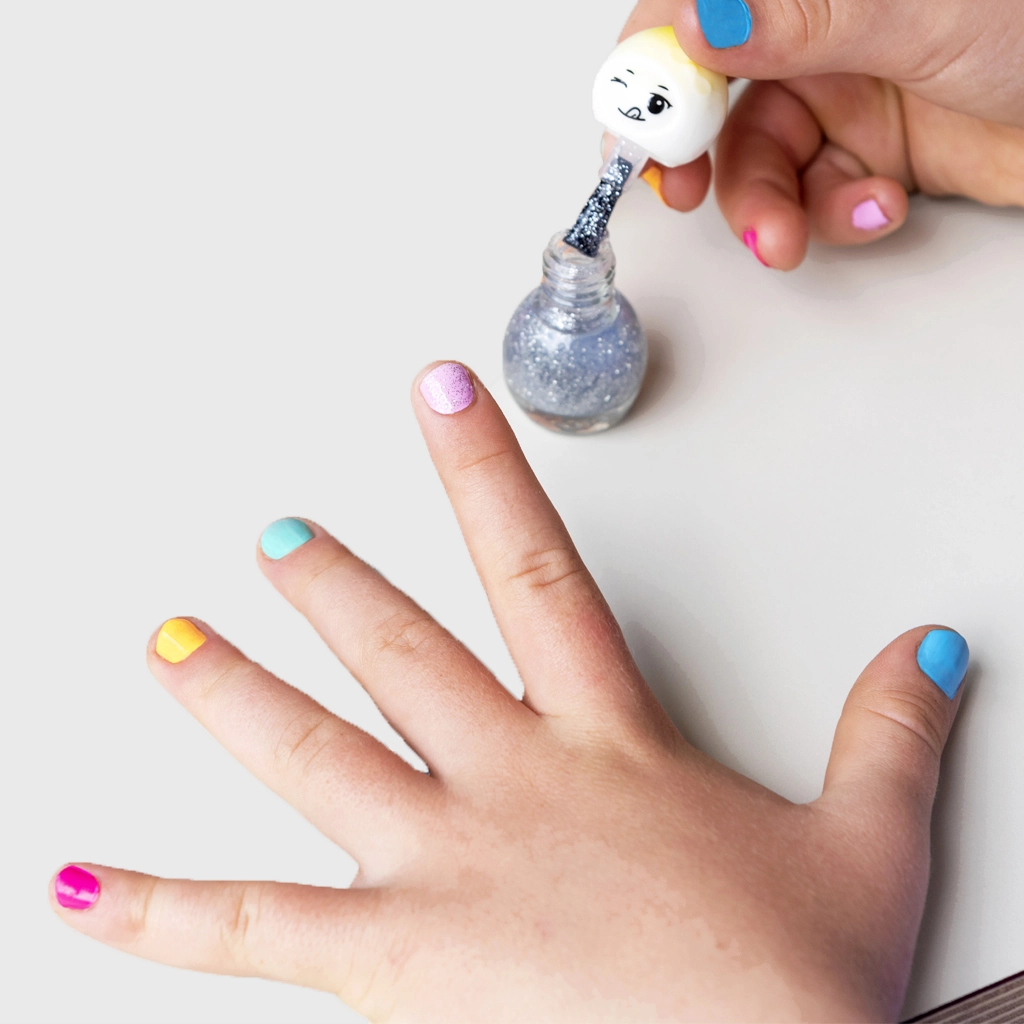
Nail polish doesn’t just sit on top of the nail—it forms a thin film that sticks through a combination of physical and chemical bonds. How well it holds depends on both the polish formula and the condition of the nail surface. For kids, this delicate balance often explains why polish peels quickly.
How Nail Polish Bonds to the Nail Surface
When nail polish is applied, solvents in the formula begin to evaporate, leaving pigments and resins behind. These resins attach to tiny ridges on the nail plate, creating adhesion. Adult nail polish often contains stronger solvents and plasticizers that enhance this bond.
Even a small difference in chemistry can change how long polish lasts. Think of it like tape on a wall: smooth surfaces hold tape differently than textured ones. Nail polish for kids has softer ingredients, so the “grip” isn’t as strong, making it prone to peeling after play or washing.
Why Children’s Nails May Not Hold Polish Well
Children’s nails are naturally thinner and more flexible than adult nails (American Academy of Dermatology, 2019). This softness reduces surface contact, limiting the polish’s ability to adhere. Tiny ridges and oils on the nail also interfere with the bonding process.
Add everyday activity—washing hands, playing with toys, or rubbing nails together—and even well-applied polish can chip or peel. For example, a five-year-old building a block tower may notice polish flaking by lunchtime. It’s not the polish failing; it’s the nail itself that isn’t designed for long-lasting coatings.
Common Reasons Why Kids Nail Polish Peels Off
Kids nail polish peeling is almost always the result of multiple factors working together. From nail texture to daily activities, understanding these causes helps parents set realistic expectations.
Nail Surface Conditions in Children
Children’s nails are softer, thinner, and more porous than adult nails. The surface often has fine ridges, small oils, and natural moisture that prevent polish from fully bonding.
Even if a child carefully applies nail polish, microscopic gaps form between the polish and nail surface. Over time, these gaps expand, causing edges to lift. For example, a child painting her nails in the morning may notice flaking by afternoon simply due to the natural texture of her nails.
Frequent Handwashing and Water Exposure
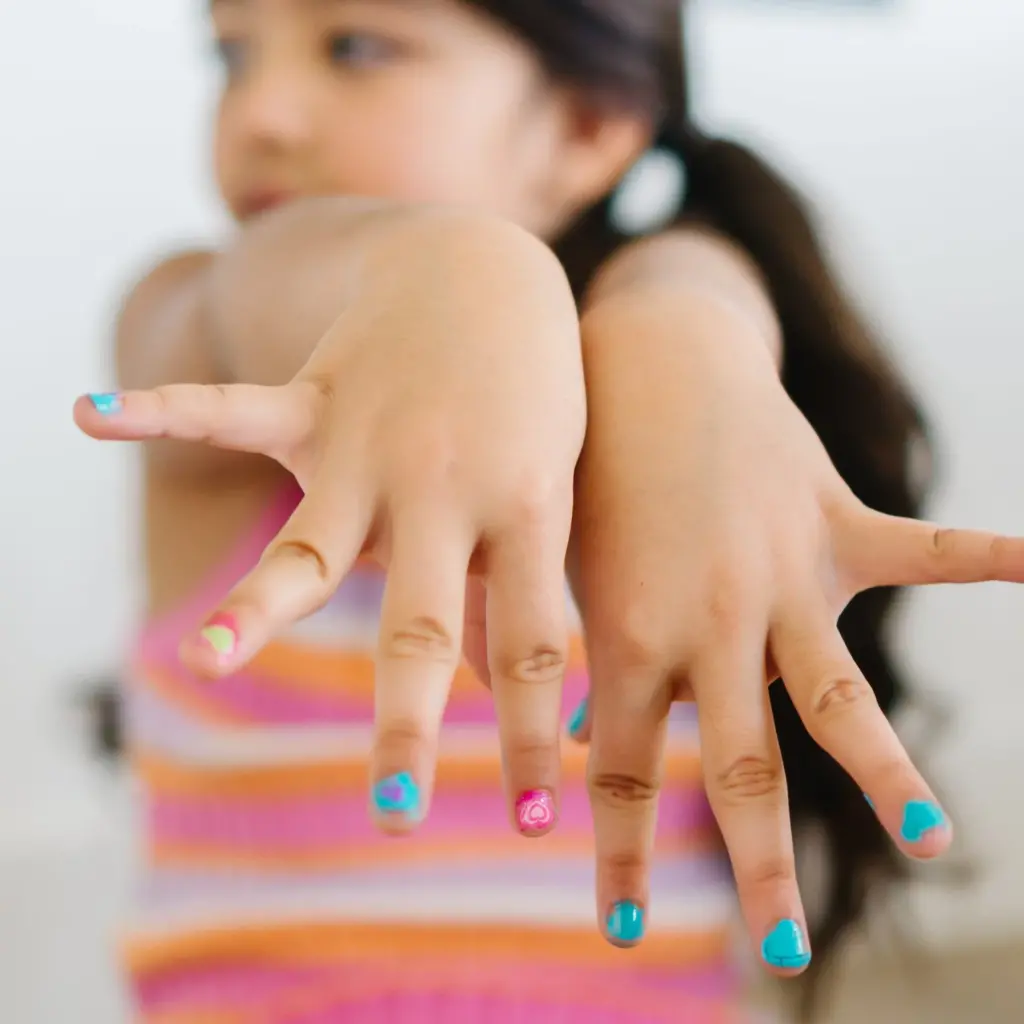
Water is a major factor in peeling nail polish for kids. Young children wash their hands frequently and often soak them during baths or play. Water seeps under the polish, weakening the bond with the nail.
In addition, soaps and lotions can slightly soften nail polish, especially water-based formulas. Even a quick rinse or swim can trigger chips and peeling, turning a fresh manicure into a patchy look within hours.
Play Activities That Cause Abrasion
Children are naturally active, and everyday play can wear down nail polish quickly. Activities like building blocks, drawing with markers, or climbing playground equipment create friction against the nail surface.
Even gentle rubbing or tapping can create tiny cracks that spread across the polish. This is why kids nail polish often peels at the tips first—these are the areas under the most stress during normal play.
Age-Related Factors Affecting Nail Polish Longevity
Kids’ nails change as they grow, which directly impacts how long nail polish lasts. Younger nails are more delicate, while older children’s nails are slightly stronger.
Differences Between Toddler and Older Children Nails
Toddler nails are very soft and thin, making them less able to hold nail polish. Even gentle brushing or touching can lift the edges. Older children have thicker nails with more developed ridges, which improve polish adhesion slightly.
For example, a two-year-old’s freshly painted nails might peel within hours, while an eight-year-old’s nails may keep polish intact for a day or two. The natural nail structure alone plays a major role in durability.
Nail Growth Rate and Its Impact on Polish Durability
Children’s nails grow faster than adult nails—sometimes up to 3 millimeters per month (American Academy of Dermatology, 2019). Fast growth pushes polish toward the tips, where it naturally chips or peels.
This is why even carefully applied nail polish on a school-age child may look perfect in the morning but start lifting by the end of the week. Rapid growth combined with play and water exposure creates a perfect scenario for peeling.
Application Techniques That Influence Peeling
How nail polish is applied can affect how long it lasts. Even safe, non-toxic kids nail polish can peel quickly if nails aren’t properly prepared or if coats aren’t applied carefully. Small differences in technique make a noticeable impact.
Importance of Proper Nail Preparation
Before applying polish, nails should be clean, dry, and free of oils. Natural oils, lotions, or dirt create a barrier that prevents polish from bonding properly.
For example, a child painting her nails right after playing with lotion-covered hands may notice polish peeling faster. Gently wiping nails with a soft cloth or mild, water-based cleanser can reduce this effect. Proper prep sets a stronger foundation for polish, even if it won’t prevent peeling entirely.

Number of Coats and Drying Time
Applying too many thick coats can trap moisture and increase peeling. Conversely, too few coats may not provide enough pigment or film to hold up to wear.
Drying time also matters. Kids nail polish often dries quickly, but rushing the process or layering wet coats can weaken adhesion. Waiting a few minutes between coats allows each layer to form a thin, stable film that resists lifting longer.
Environmental and Lifestyle Factors
Kids nail polish doesn’t exist in a vacuum. The environment and everyday habits play a big role in how long it lasts. Temperature, humidity, and routine activities can all affect polish durability in subtle but important ways.
Humidity, Temperature, and Nail Polish Performance
High humidity can slow the drying of nail polish, while very dry air may cause cracks as polish shrinks. Temperature swings can also stress the polish film, making it more likely to peel.
For example, a child painting her nails indoors on a humid day may notice polish staying tacky longer. Once exposed to cooler or drier air outside, small cracks can form at the edges, starting the peeling process. Even mild environmental changes can affect adhesion.
Toys, Art Supplies, and Everyday Objects That Affect Polish
Children constantly touch toys, crayons, markers, and other objects that create friction. Hard or rough surfaces can scratch polish or lift edges over time.
A simple example: a child coloring with crayons and tapping her nails on the table may notice tiny chips the same afternoon. Frequent contact with surfaces, even gently, accelerates peeling. The more active the play, the shorter the polish lifespan tends to be.
Health and Safety Considerations
Kids nail polish is formulated with safety as a priority, which can influence how it behaves on nails.
Safe Ingredients in Kids Nail Polish
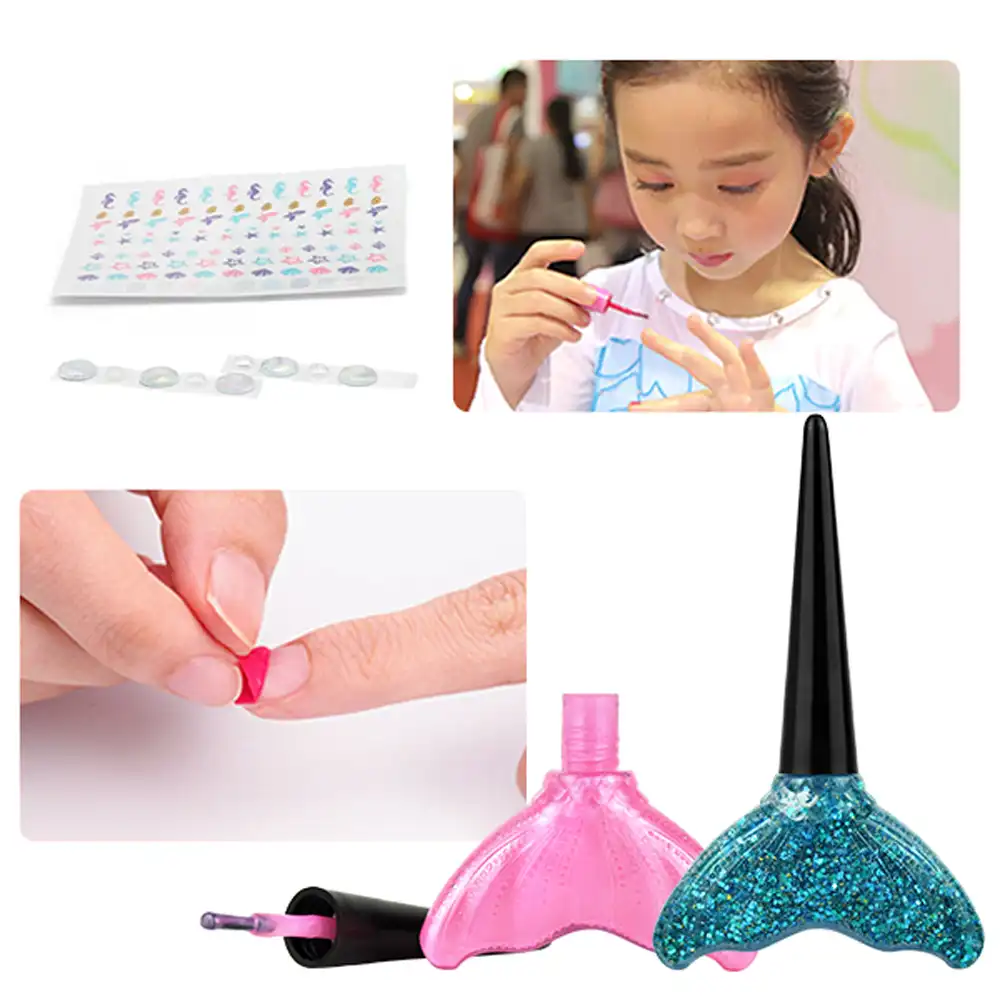
Kids nail polish avoids harsh chemicals like formaldehyde, toluene, and DBP (U.S. Consumer Product Safety Commission, 2020). Instead, it uses gentle resins, water-based solvents, and mild plasticizers to create color and flexibility.
These safer ingredients reduce the risk of irritation but also make polish less adhesive. Even with careful application, nails coated with gentle formulas may start peeling sooner than those with stronger adult polishes.
How Nail Health Affects Polish Longevity
Healthy nails are essential for polish adhesion. Kids often have thin, flexible nails that are more prone to moisture and oils, which can weaken polish bonds.
For example, nails that are dry, brittle, or uneven may cause the polish to lift at the edges. Simple habits, like keeping nails clean and trimming them gently, can slightly improve polish wear, but natural nail structure will always play a key role in how long kids nail polish lasts.
Fun Ways to Minimize Peeling and Extend Wear
While kids nail polish is prone to peeling, small adjustments and gentle practices can make nail play last longer.
Gentle Nail Care Practices for Children
Keeping nails clean, dry, and trimmed reduces lifting and peeling. Avoiding harsh soaps and frequent scrubbing also helps maintain polish adherence.
For example, a child who washes hands carefully and dries them gently before nail play may notice polish lasting a bit longer. Even small habits like these create a more stable surface for kids nail polish to stick.
Creative Alternatives to Extend Fun Without Damaging Nails
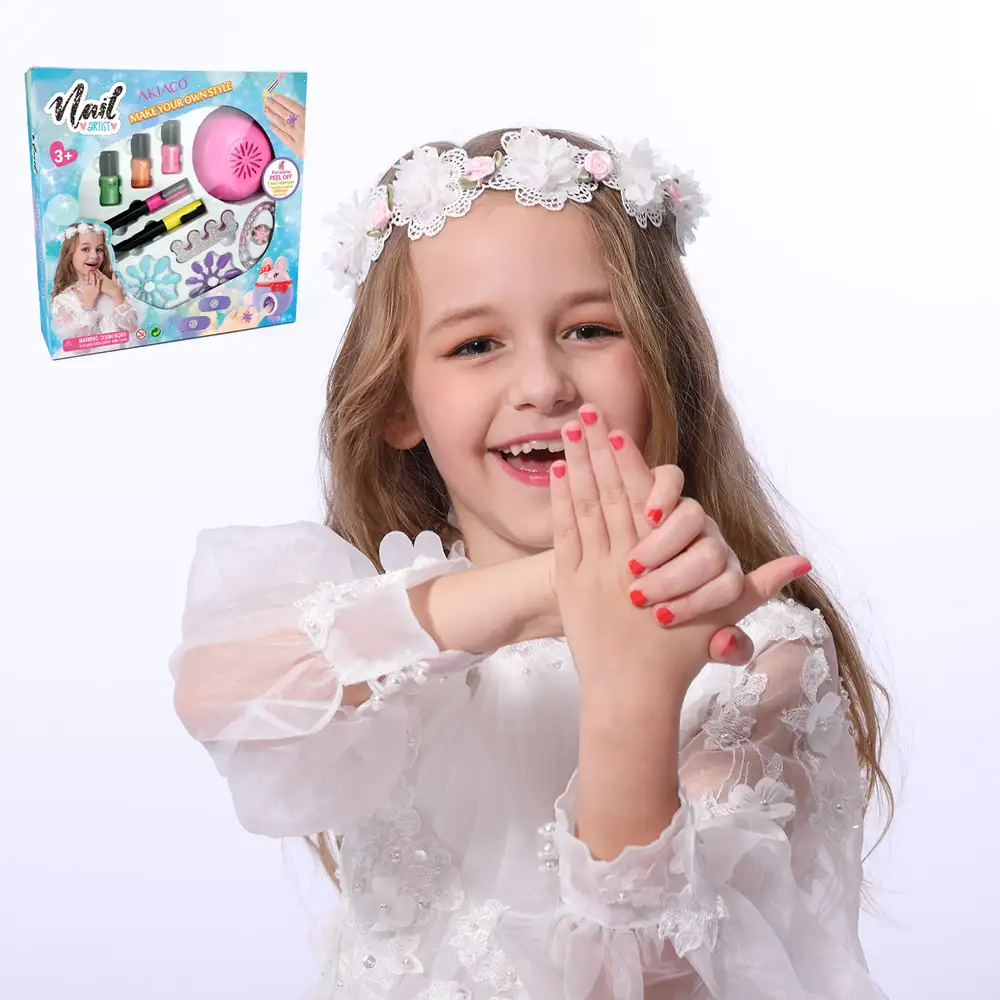
Activities like sticker nails, temporary stamps, or nail wraps can extend the visual fun of nail polish without relying solely on adhesion. These options reduce the stress on delicate nails while keeping the experience playful.
Imagine a group of children at a party: some paint their nails, while others try peel-off designs or colorful stickers. Everyone enjoys bright colors, but the risk of peeling or nail damage is lower for those using gentler alternatives.
Expert Tips for Parents on Kids Nail Polish
Parents can make nail play fun and safe while managing expectations about polish durability. Simple guidance helps children enjoy nail color without frustration or damage.
Encouraging Safe Play and Nail Care
Remind children to wash hands gently, dry nails thoroughly, and avoid picking at polish. Encourage short, supervised nail sessions to reduce accidental peeling.
For example, letting a child paint nails before storytime or a quiet activity can give polish time to set properly. Small routines like this reinforce good habits while keeping the experience enjoyable.
Understanding Expectations for Polish Durability in Children
It’s important to accept that kids nail polish will peel quickly due to natural nail structure, play, and fast growth. Parents who understand this can focus on the fun of the activity rather than long-lasting wear.
Knowing that even careful application may last only a day or two helps set realistic expectations. Children can enjoy the colors, and parents can reduce frustration by planning frequent, playful polish sessions.
Conclusion
Kids nail polish peels off for a mix of scientific and practical reasons: thin nails, fast growth, frequent water exposure, active play, and safe, gentle formulas. By understanding the chemistry and biology behind polish, parents can better support safe, enjoyable nail play.
Even though peeling is normal, small adjustments—like gentle nail care, proper application, and creative alternatives—can help kids enjoy colorful nails longer while keeping their tiny hands healthy and safe.